
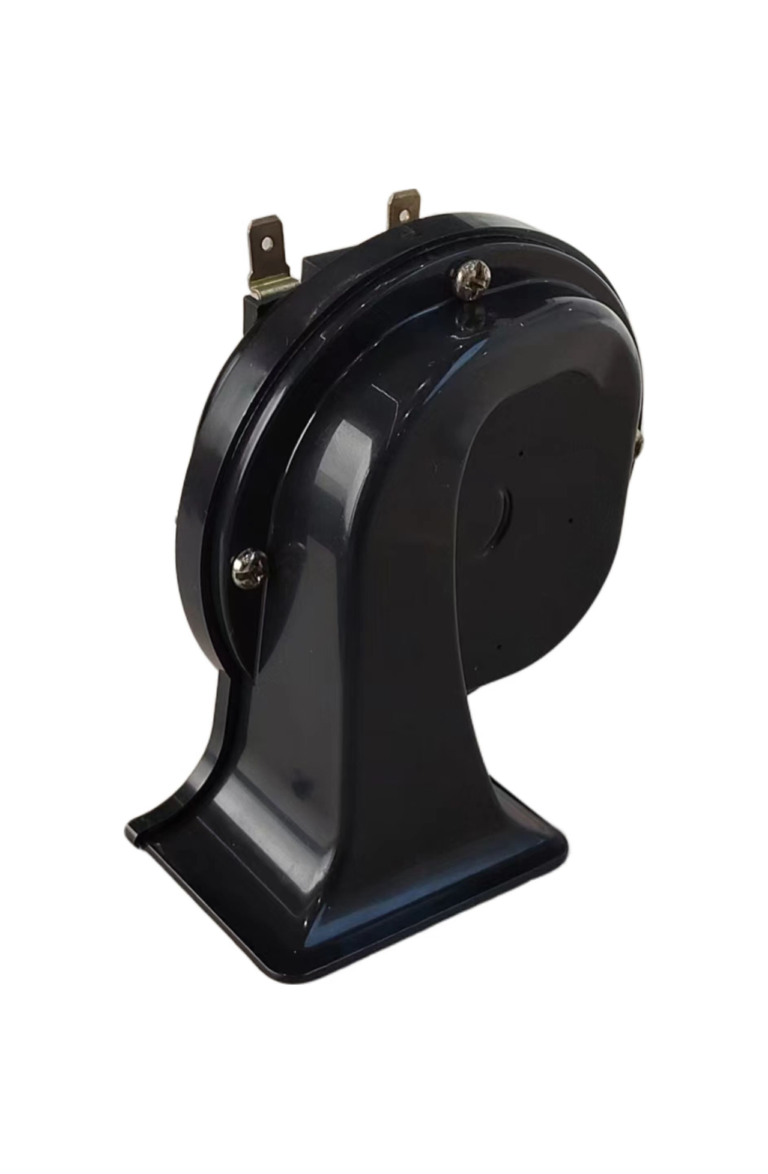
Most drivers underestimate their car horn's importance until they desperately need it. This essential safety device has evolved into a sophisticated warning system that deserves proper understanding and maintenance.
Modern car horns prevent 1 in 4 potential accidents through instant audible warnings, with advanced designs offering reliability in all weather conditions and emergency situations.
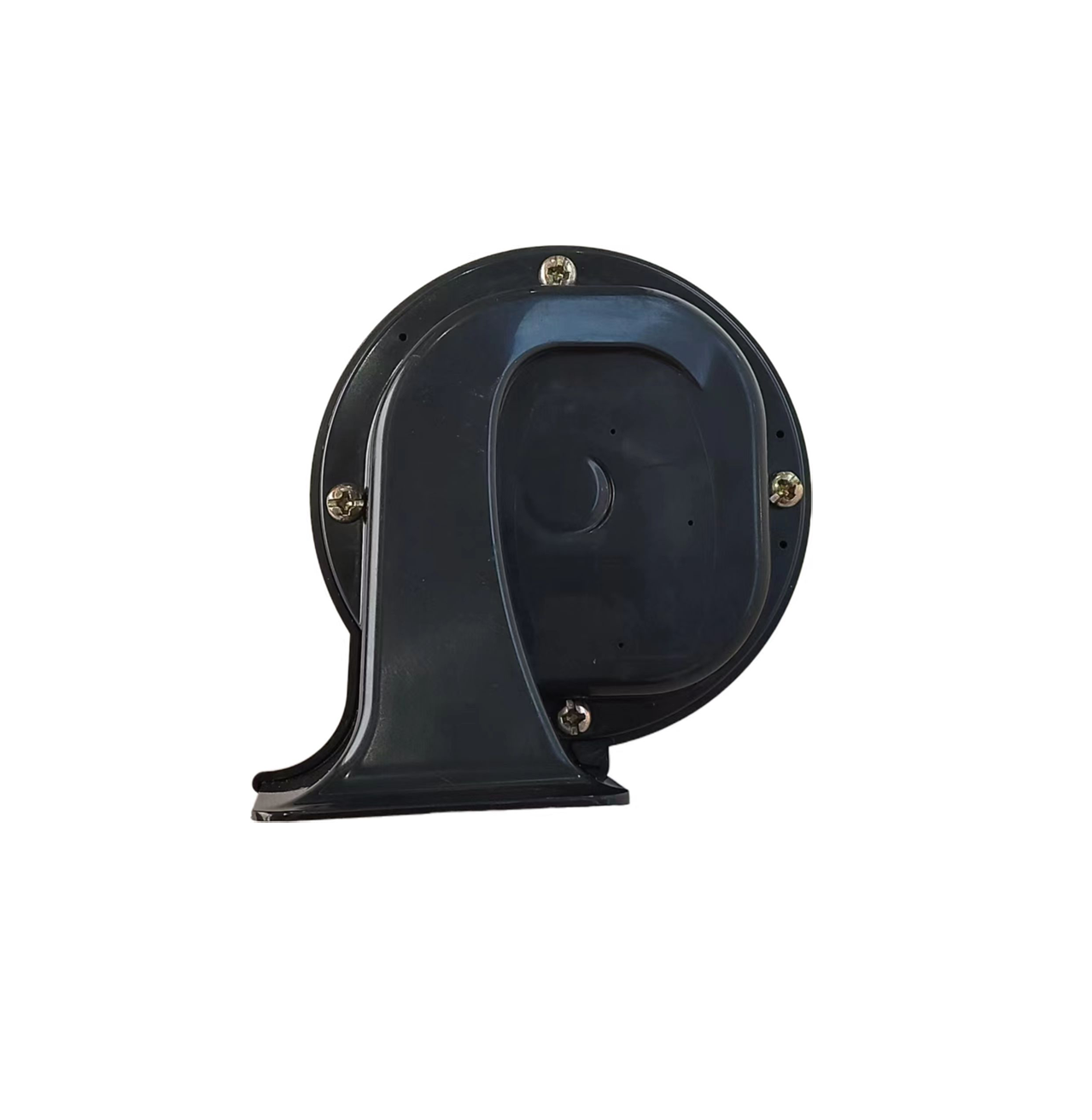
The History of Car Horns
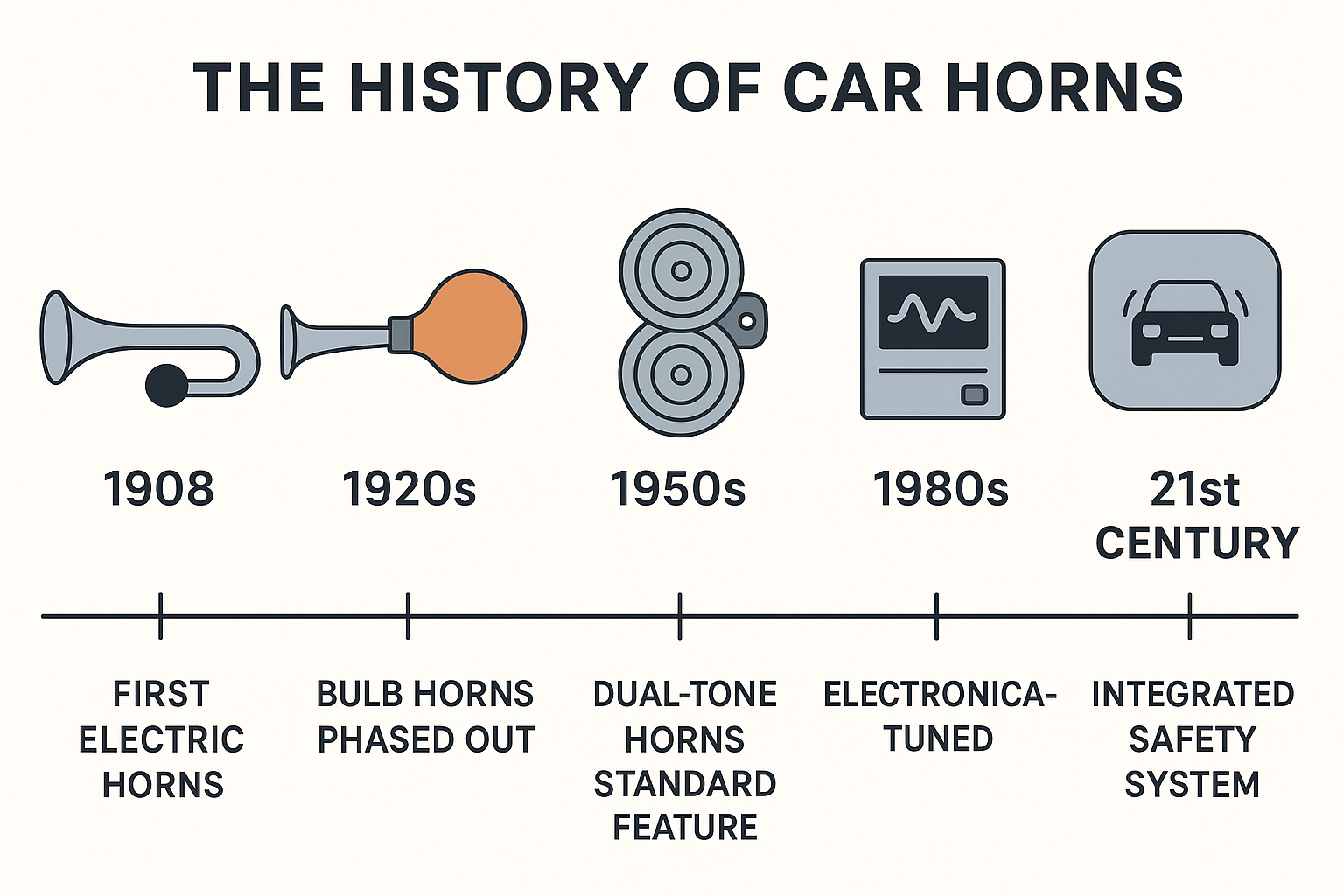
From simple hand-operated devices to today's electronic systems, car horns have undergone remarkable technological evolution to meet growing safety demands.
Key historical developments:
- 1908: First electric horns introduced
- 1920s: Bulb horns phased out
- 1950s: Dual-tone horns became standard
- 1980s: Computer-tuned frequencies
- 2000s: Integrated safety systems
Car Horn Timeline
| Era | Technology | Sound Level | Key Improvement |
|---|---|---|---|
| 1890s | Hand squeeze bulb | 80dB | First warning device |
| 1910s | Electric single-tone | 90dB | Consistent operation |
| 1930s | Electric dual-tone | 100dB | Better recognition |
| 1960s | Air horn systems | 115dB | Heavy vehicle use |
| Today | Electronic multi-tone | 118dB | Customizable sounds |
Modern advantages:
- Weatherproof designs
- Crash-resistant mounting
- Energy efficient
- Clearer sound projection
- Longer lifespan
Electric Horns and Air Horns: Each Has Its Own Advantages in Warning Functions
Different vehicles require different horn types based on size, usage environment, and safety requirements - understanding these differences ensures optimal protection.
Comparison of horn types:
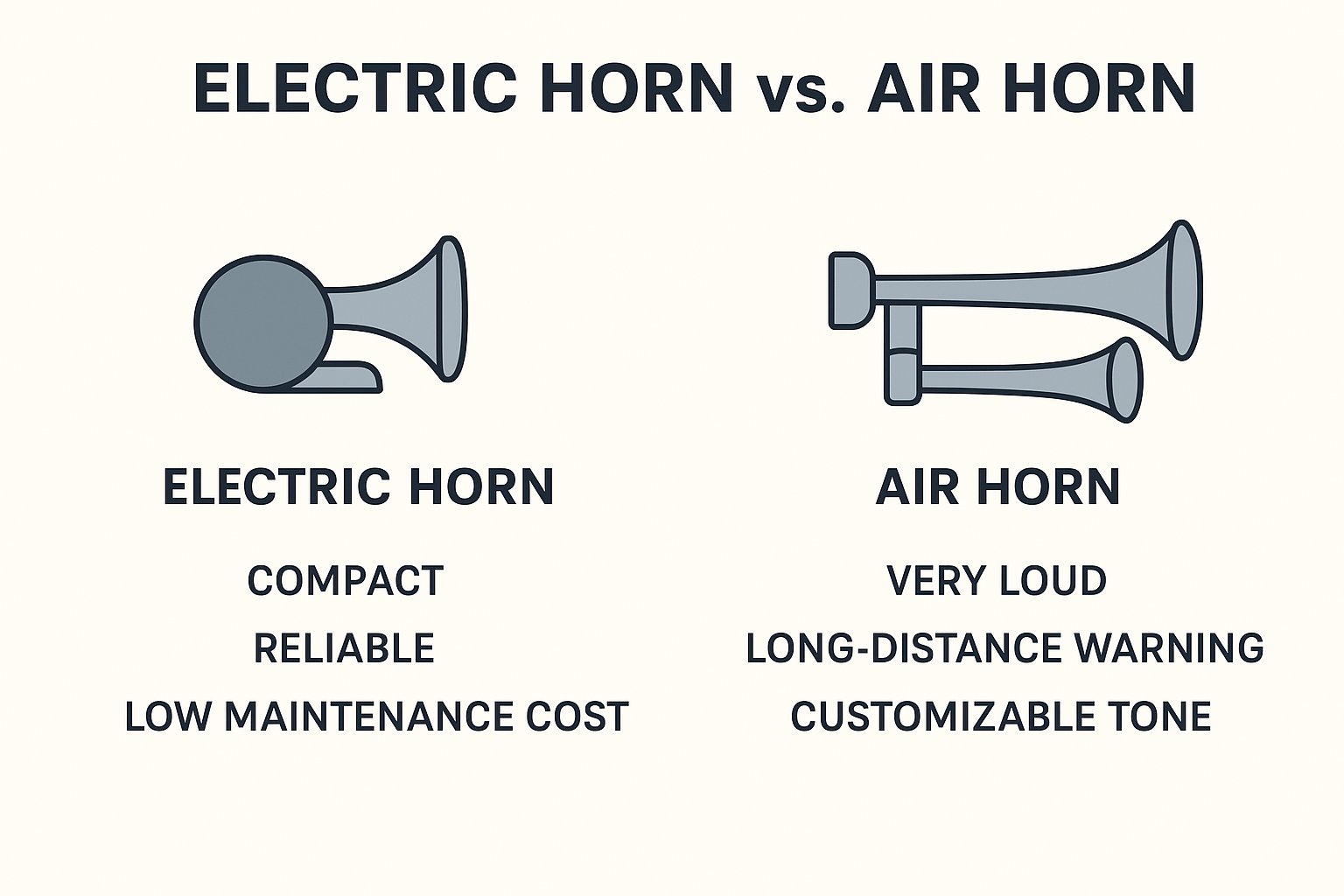
- Electric horns: Compact, reliable, low maintenance
- Air horns: Extremely loud, long-distance warning
- Electronic horns: Customizable tones, energy efficient
Horn Type Comparison Chart
| Feature | Electric Horn | Air Horn | Electronic Horn |
|---|---|---|---|
| Volume | 107-115dB | 120-150dB | 100-118dB |
| Power Use | 5-6 amps | 15-30 amps | 3-4 amps |
| Lifespan | 50,000+ cycles | 20,000 cycles | 100,000+ cycles |
| Best For | Passenger cars | Trucks/buses | Luxury vehicles |
| Maintenance | Minimal | Regular | None |
Selection tips:
- Match vehicle size
- Consider climate
- Check legal limits
- Verify power supply
- Test sound quality
Choosing the Right Horn Increases Driving Safety
Selecting the proper horn involves more than just loudness - it requires matching technical specifications to your vehicle's requirements and driving conditions.
Critical selection factors:
- Legal decibel limits (check local laws)
- Weather resistance (IP rating)
- Power consumption (amp draw)
- Mounting space constraints
- Compatibility with existing wiring
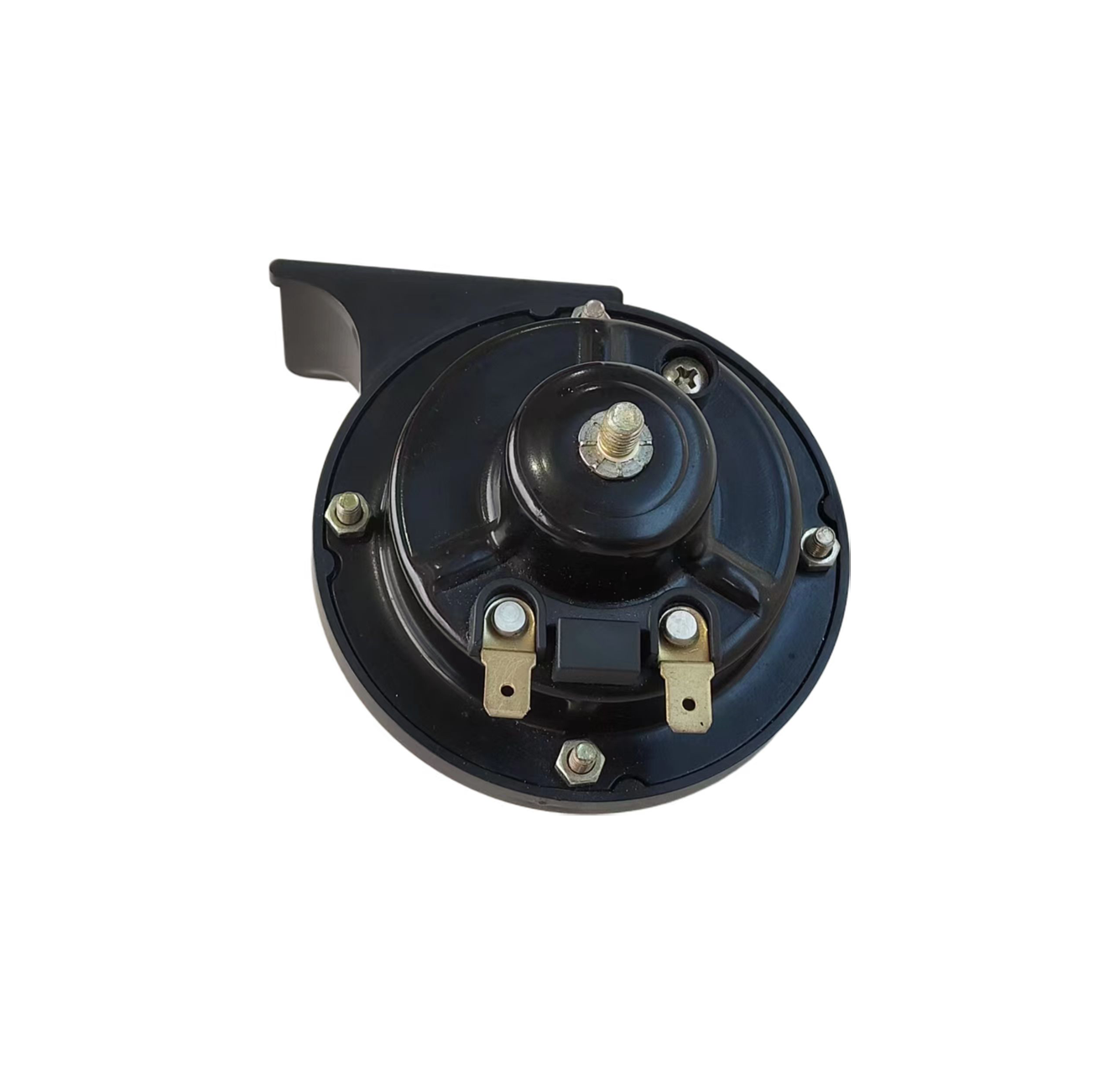
Safety Upgrade Checklist
| Current Horn | Recommended Upgrade | Safety Benefit |
|---|---|---|
| Single-tone | Dual-tone | 30% better recognition |
| 105dB | 115dB | 2x warning distance |
| Plastic housing | Metal housing | 5x durability |
| No rating | IP67 rated | Waterproof operation |
| 1-year warranty | 3-year warranty | Long-term reliability |
Installation advice:
- Use proper gauge wiring
- Secure mounting points
- Check fuse rating
- Test angle of sound projection
- Regular maintenance checks
Conclusion
From their fascinating history to technical specifications and smart selection criteria, car horns represent critical safety technology that deserves careful consideration for every vehicle.
TIAN
FHL GBSY JS-TECH Automotive Safety
info@jindongauto.com
www.jingdongparts.com
Engineering Excellence · Safety First · Reliable Performance