

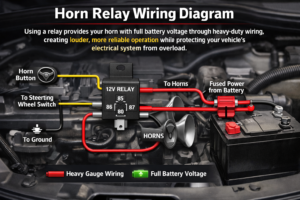
That weak, pathetic honk when you need a loud warning blast often means your horn isn't getting enough power - the exact problem a relay solves.
Using a relay provides your horn with full battery voltage through heavy-duty wiring, creating louder, more reliable operation while protecting your vehicle's electrical system from overload.
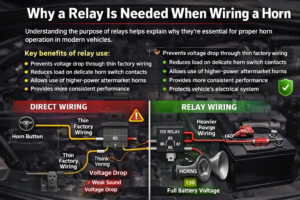
Why a Relay Is Needed When Wiring a Horn
Understanding the purpose of relays helps explain why they're essential for proper horn operation in modern vehicles.
Key benefits of relay use:
- Prevents voltage drop through thin factory wiring
- Reduces load on delicate horn switch contacts
- Allows use of higher-power aftermarket horns
- Provides more consistent performance
- Protects vehicle's electrical system
Horn Performance With/Without Relay
| Configuration | Voltage at Horn | Current Draw | Sound Output | Switch Longevity |
|---|---|---|---|---|
| Direct Wiring | 9-11V | 15-20A | Weak | 1-2 years |
| With Relay | 12.5-14V | 15-20A | Loud | 5+ years |
| Dual Horns Direct | 7-9V | 30-40A | Very Weak | <1 year |
| Dual Horns Relayed | 12.5-14V | 30-40A | Very Loud | 5+ years |
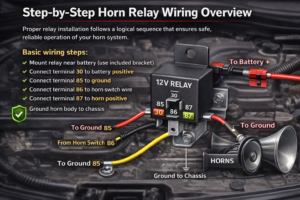
Step-by-Step Horn Relay Wiring Overview
Proper relay installation follows a logical sequence that ensures safe, reliable operation of your horn system.
Basic wiring steps:
- Mount relay near battery (use included bracket)
- Connect terminal 30 to battery positive
- Connect terminal 85 to ground
- Connect terminal 86 to horn switch wire
- Connect terminal 87 to horn positive
- Ground horn body to chassis
Tools and Materials Needed
| Item | Purpose | Recommended Spec |
|---|---|---|
| Relay | Power switching | 30-40A rating |
| Fuse Holder | Circuit protection | 20A blade type |
| Wire | Power connections | 12-14 gauge |
| Connectors | Secure joints | Weatherproof type |
| Tools | Installation | Crimpers, strippers |
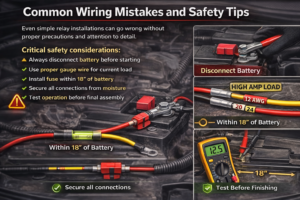
Common Wiring Mistakes and Safety Tips
Even simple relay installations can go wrong without proper precautions and attention to detail.
Critical safety considerations:
- Always disconnect battery before starting
- Use proper gauge wire for current load
- Install fuse within 18" of battery
- Secure all connections from moisture
- Test operation before final assembly
Troubleshooting Relay Issues
| Problem | Possible Cause | Solution |
|---|---|---|
| Horn doesn't work | Wrong terminal connections | Verify wiring diagram |
| Horn stays on | Stuck relay | Replace relay |
| Weak sound | Poor ground connection | Clean contact points |
| Intermittent operation | Loose wiring | Check all connections |
| Blown fuse | Short circuit | Inspect wiring |
Conclusion
Proper relay installation transforms horn performance while protecting your vehicle's electrical system - a worthwhile upgrade for any car owner.
TIAN
FHL GBSY JS-TECH Automotive Safety
info@jindongauto.com
www.jingdongparts.com
Precision Engineering · Safety First · Reliable Performance