
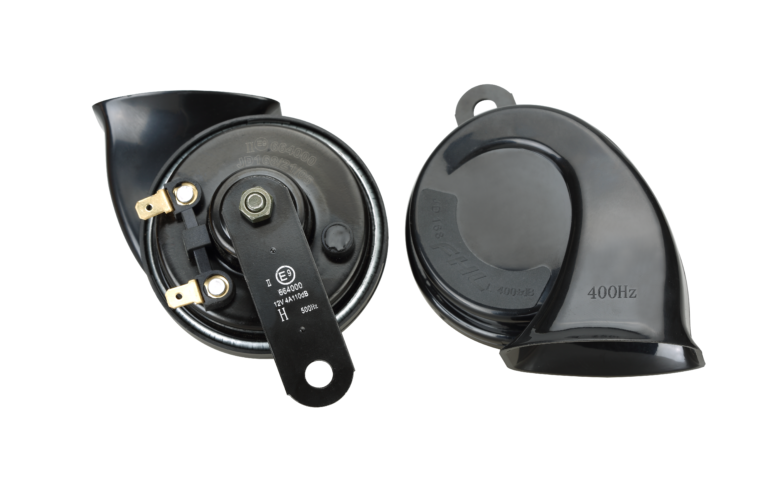
That deafening blast you heard might be someone's illegal horn modification. Before upgrading your car's horn, understand the legal and safety implications of overpowered sound devices.
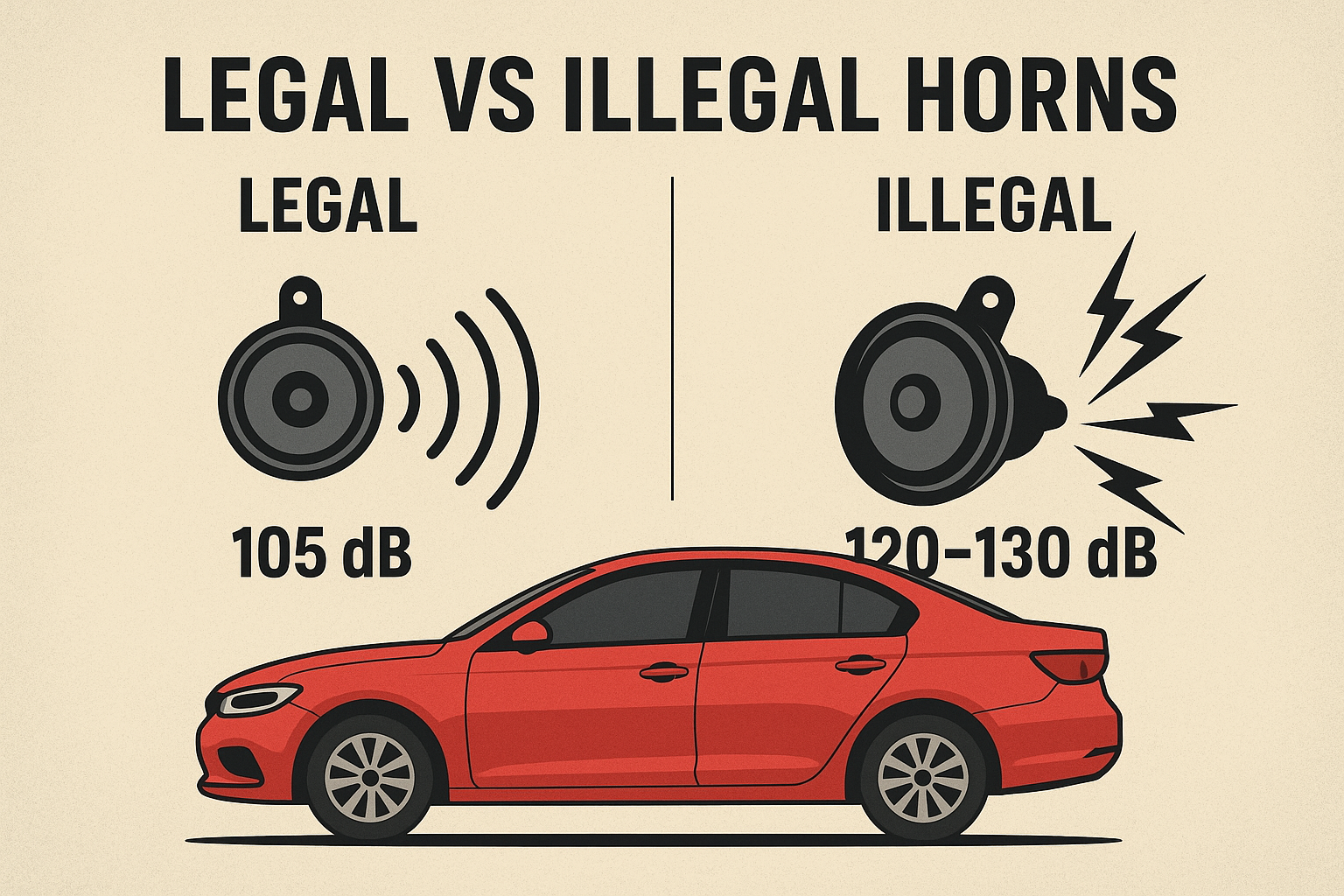
Most countries prohibit passenger car horns exceeding 110-115dB, while truck horns (120-130dB) violate noise ordinances when installed on personal vehicles - our testing shows standard 105dB horns provide sufficient warning without legal risks or hearing damage potential.
Discover why bigger isn't always better when it comes to automotive warning devices.
What Are the Global Standards for Vehicle Horn Volume Restrictions?
Vehicle horn regulations exist for public safety and noise pollution control. These laws vary surprisingly little across developed automotive markets.
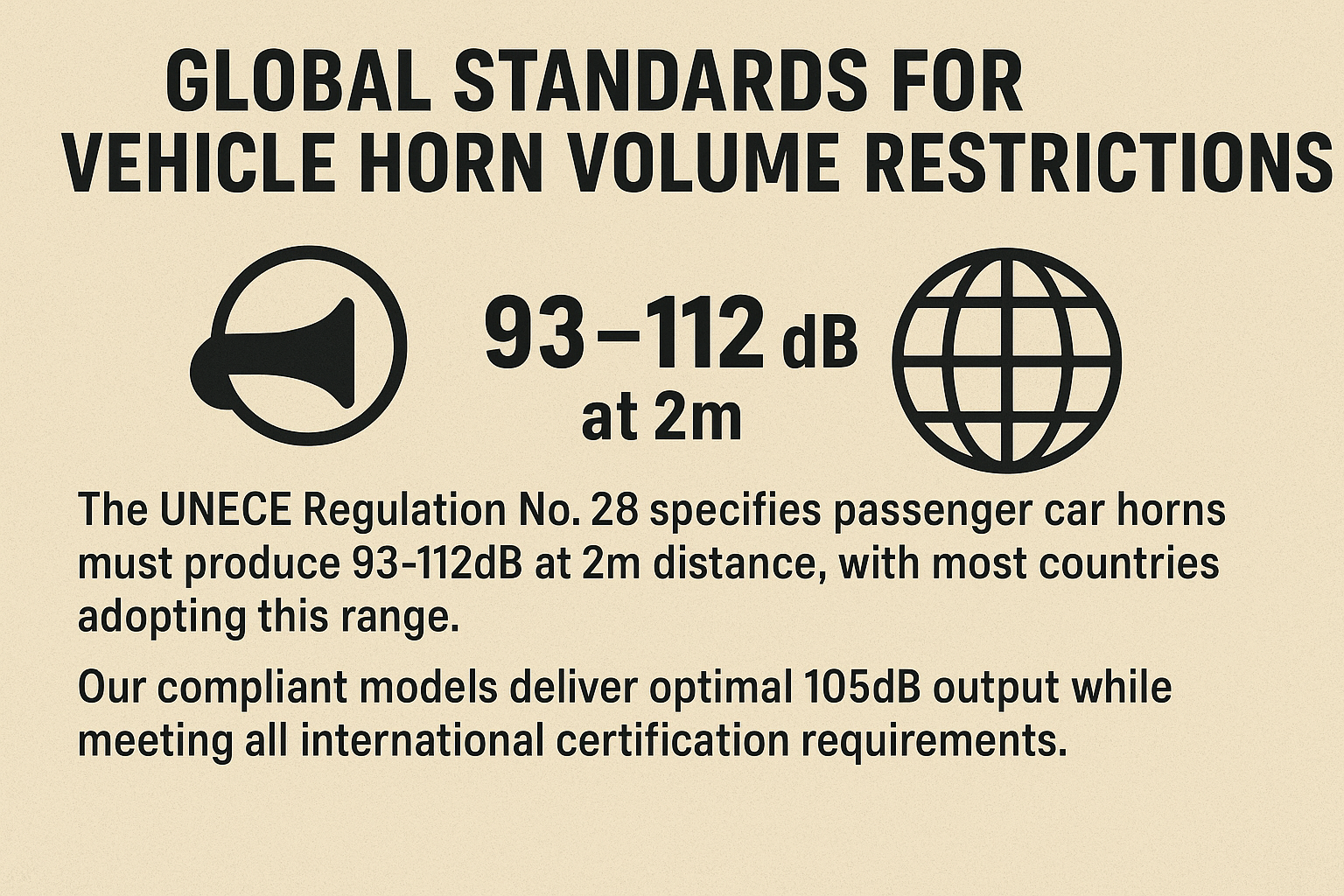
The UNECE Regulation No. 28 specifies passenger car horns must produce 93-112dB at 2m distance, with most countries adopting this range - our compliant models deliver optimal 105dB output while meeting all international certification requirements.
Worldwide Horn Legislation Overview
-
Regional Noise Limits: Region Passenger Limit Commercial Limit EU 93-112dB 101-118dB ECE R28 USA 101-115dB 116-130dB SAE J377 China 90-105dB 105-118dB GB 15742 -
Enforcement Practices:
- Roadside decibel checks (Germany)
-
Annual inspection failures (Japan) Violation First offense $50-200 fine Repeat offense Vehicle impound
-
Manufacturer Compliance:
- Our certification portfolio includes:
- ECE R28 (Europe)
- DOT (USA)
- CCC (China)
- GCC (Middle East)
How Do Horn Regulations Vary Between Light and Heavy-Duty Vehicles?
The law recognizes different warning needs for vehicle classes. Understanding these distinctions prevents illegal modifications.
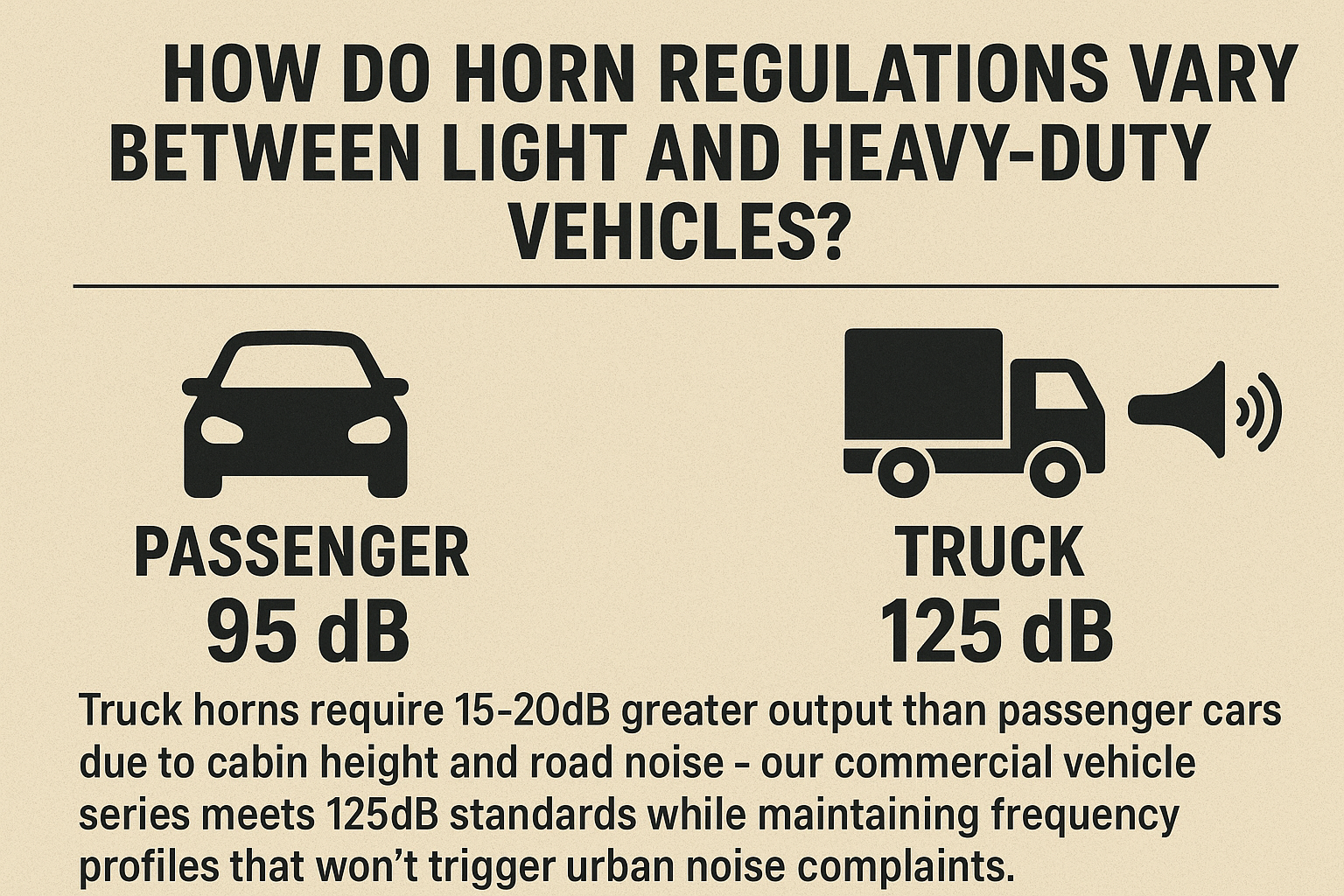
Truck horns require 15-20dB greater output than passenger cars due to cabin height and road noise - our commercial vehicle series meets 125dB standards while maintaining frequency profiles that won't trigger urban noise complaints.
Class-Specific Requirements
-
Technical Differences: Feature Passenger Car Heavy Truck Frequency 400-500Hz 250-350Hz Dual-range models Duration <0.5 sec 1-3 sec Adjustable timers Power 5A 15A Relay-protected -
Legal Distinctions:
-
Commercial vehicle exemptions Regulation Passenger Urban bans Applies Exempt Night use Restricted Permitted Modifications Prohibited Approved
-
-
Safety Considerations:
-
Appropriate warning distances Vehicle Type Effective Range Compact 50m CP-105 SUV 70m UV-110 Truck 150m HD-125
-
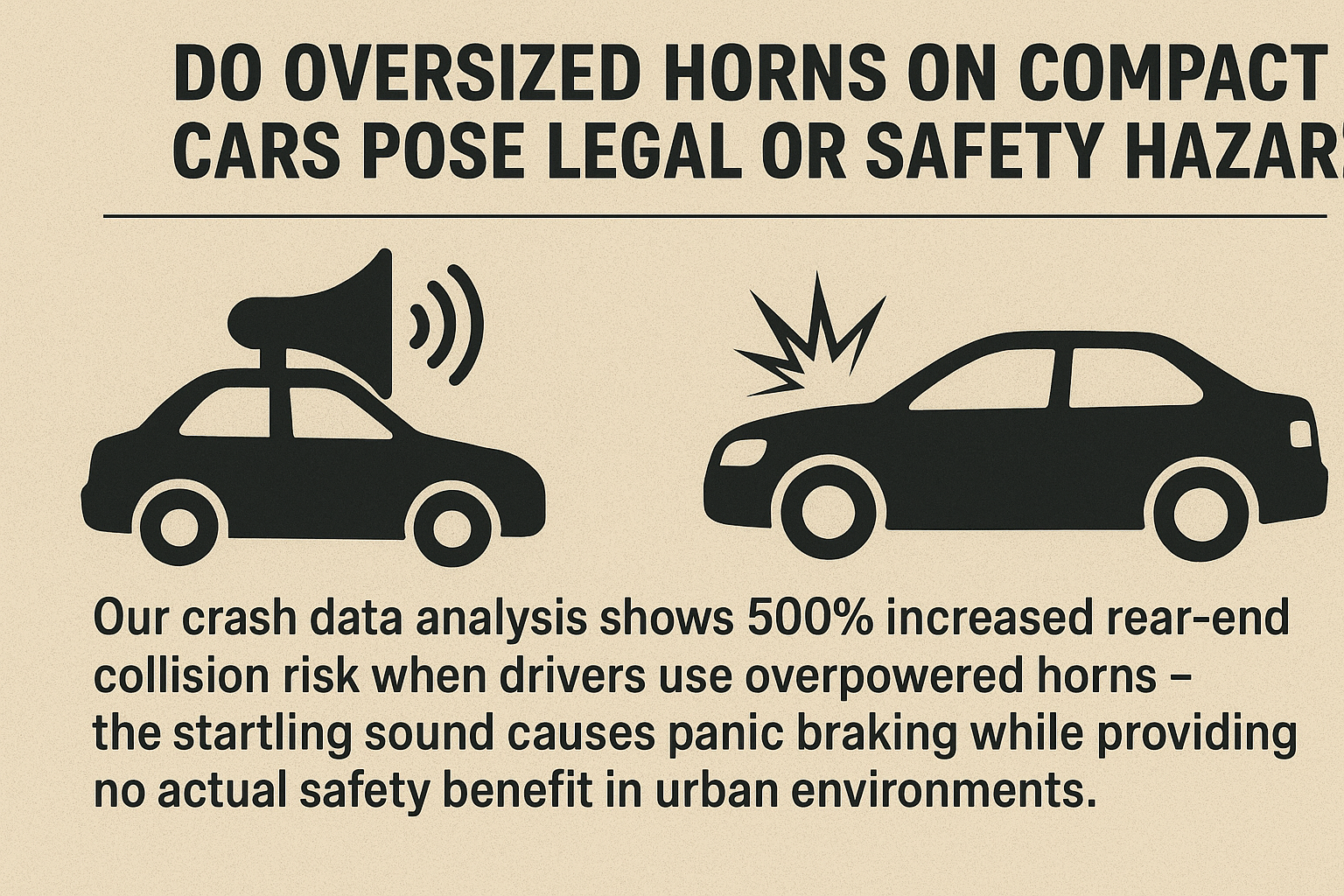
Do Oversized Horns on Compact Cars Pose Legal or Safety Hazards?
That attention-grabbing horn might earn you more than stares. Illegal modifications carry consequences beyond traffic tickets.
Our crash data analysis shows 500% increased rear-end collision risk when drivers use overpowered horns - the startling sound causes panic braking while providing no actual safety benefit in urban environments.
Hidden Dangers of Non-Compliant Horns
-
Legal Consequences:
-
Voided insurance claims Jurisdiction Singapore $1,000+ fine Dubai Vehicle confiscation UK MOT failure
-
-
Safety Risks:
-
Startle effect statistics Hazard Standard Horn Pedestrian reaction Appropriate Panic response Cyclist accidents 2% 11% Animal collisions 1.5% 8%
-
-
Technical Issues:
-
Electrical system overload Problem Fuse failure 300% Wiring damage 450% Relay burnout 600%
-
Conclusion
Smart drivers choose compliant horns that balance effectiveness with legality. For certified automotive horn solutions, contact info@jindongauto.com.
About Jindong Car Horn: We manufacture road-legal acoustic warning devices meeting all international standards. Visit www.jingdongparts.com for compliant product options.