
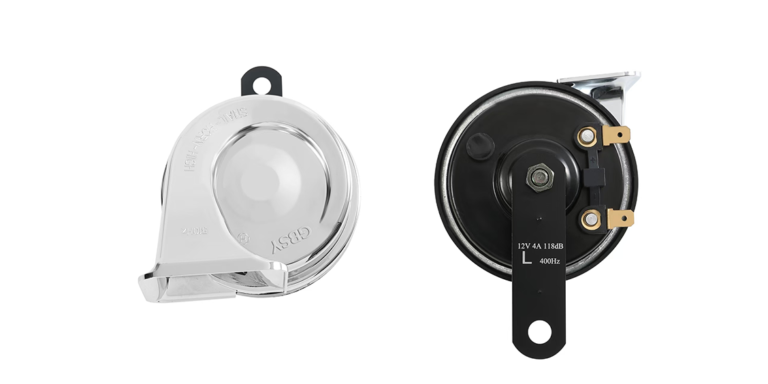
A horn that's too loud can get you fined, while one that's too quiet won't serve its purpose. Understanding these regulations ensures your horn meets both legal and safety requirements.
Most countries regulate car horn volume between 93-112dB at 2 meters, with Europe typically stricter (93-106dB) than the US (100-112dB) - exceeding these limits can result in fines up to $200.
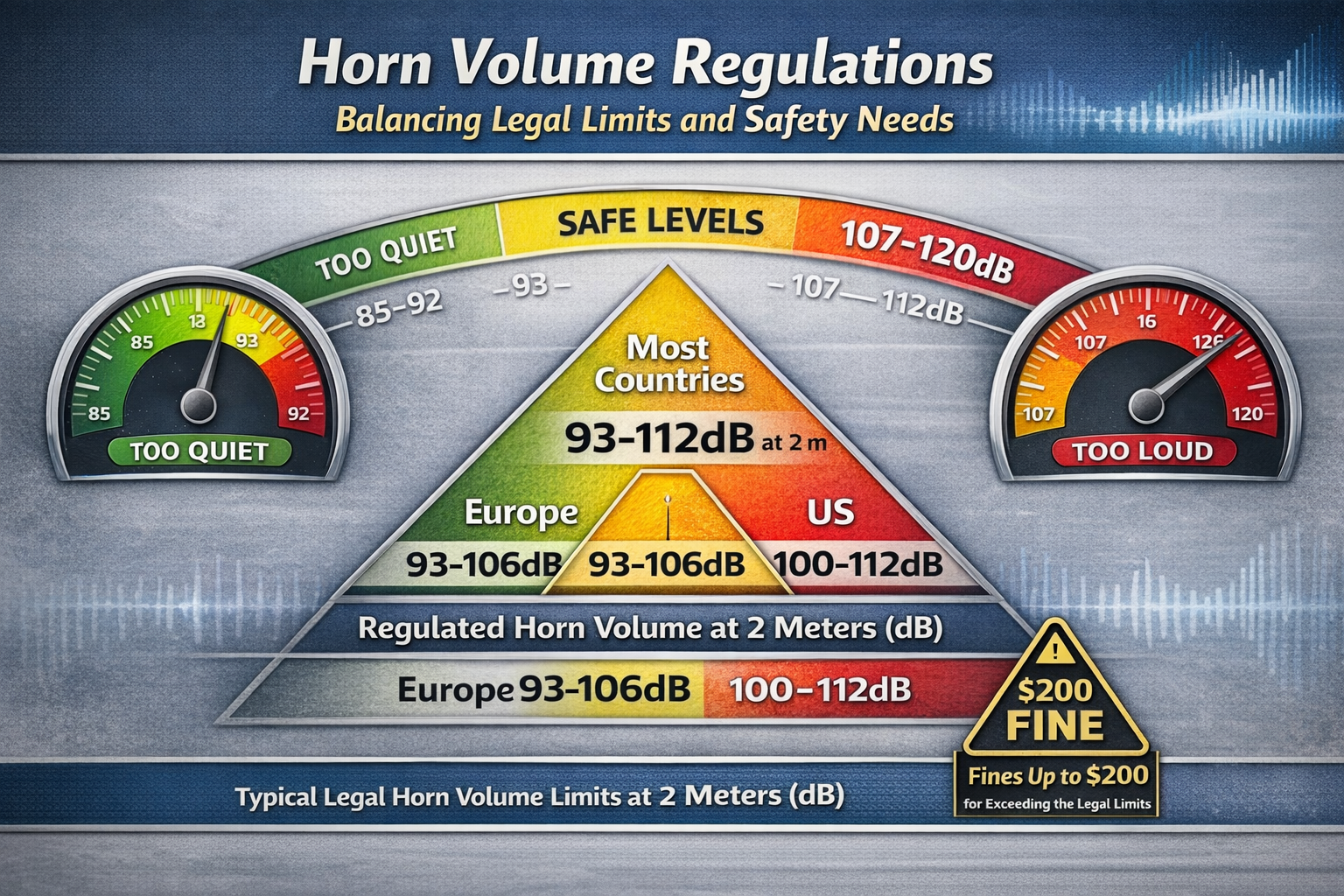
Let's examine how different regions regulate horn volume and how to stay compliant.
Interpretation of Domestic Noise Regulations
China's GB 7258-2017 standard specifies clear requirements for automotive horn volume to balance safety and noise pollution control.
Chinese regulations mandate car horns measure 90-115dB at 2 meters frontally, with motorcycles limited to 95-110dB - all horns must include manufacturer markings showing compliance certification.
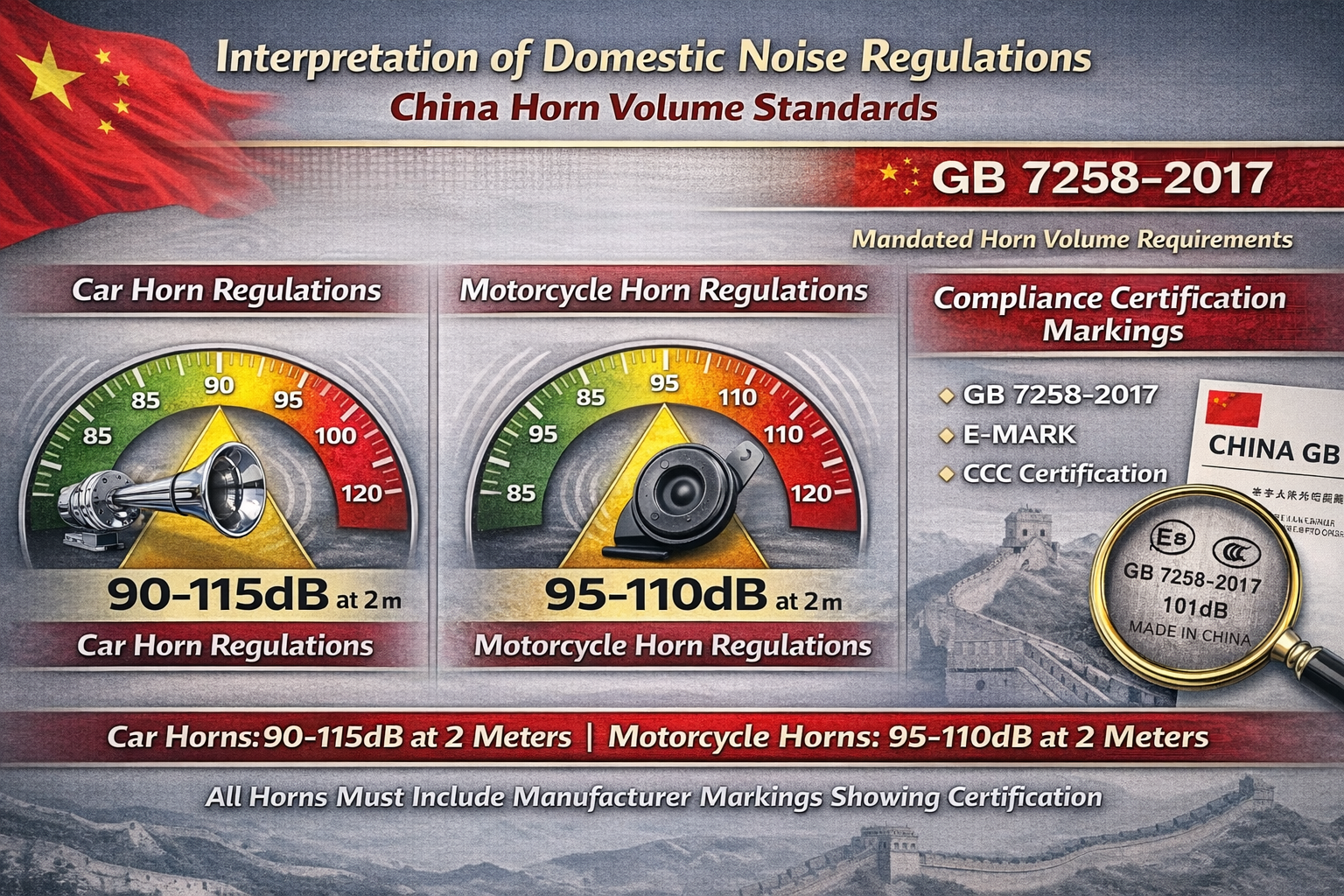
Key Points of Chinese Horn Regulations
-
Volume Limits: Vehicle Type Minimum dB Maximum dB Passenger cars 90 115 2m Motorcycles 95 110 2m Trucks/buses 100 115 2m -
Technical Requirements:
- Must produce continuous uniform sound
- No musical or multi-tone patterns allowed
- Maximum 0.5 second activation delay
- Must function between -40°C to 85°C
-
Certification Marks:
- CCC (China Compulsory Certification) required
- Manufacturer information clearly marked
- Production date visible
- Compliance label attached
-
Enforcement: Violation No CCC mark 500-2000 RMB fine Excessive volume 200-500 RMB fine Illegal modification 1000 RMB + mandatory removal
Comparison of International Regulations—European and American Standards
Global horn regulations vary significantly, with Europe focusing on noise reduction and America emphasizing audible range.
EU Regulation No 540/2014 limits passenger car horns to 93-106dB, while US FMVSS Standard 121 allows 100-112dB - reflecting different approaches to urban noise management.

International Regulation Comparison
-
Volume Standards: Region Regulation Min dB Max dB China GB 7258 90 115 2m frontal EU ECE R28 93 106 7m frontal USA FMVSS 121 100 112 2m any angle Japan JIS D5711 95 110 2m frontal -
Technical Differences: Feature Europe USA Tone type Single/Dual Any Single Activation Steering wheel Any method Steering wheel Certification E-mark SAE CCC Temperature range -20°C~55°C -30°C~70°C -40°C~85°C -
Special Requirements:
- Europe: Must not resemble emergency vehicles
- USA: Allows musical horns (state-dependent)
- Australia: Prohibits "rude" horn sounds
- Middle East: Higher maximum volumes allowed
-
Enforcement Trends:
- Europe: Increasingly strict urban enforcement
- USA: Rarely enforced unless excessive
- China: Random roadside checks common
- Southeast Asia: Lax enforcement generally
Compliant Purchase and Installation Recommendations
Choosing and installing the right horn ensures compliance while maintaining safety. Follow these guidelines to avoid legal issues.
Always purchase horns with proper certification marks (CCC for China, E-mark for Europe, SAE for US), and position them facing forward at 30-60cm height for optimal sound distribution within legal limits.
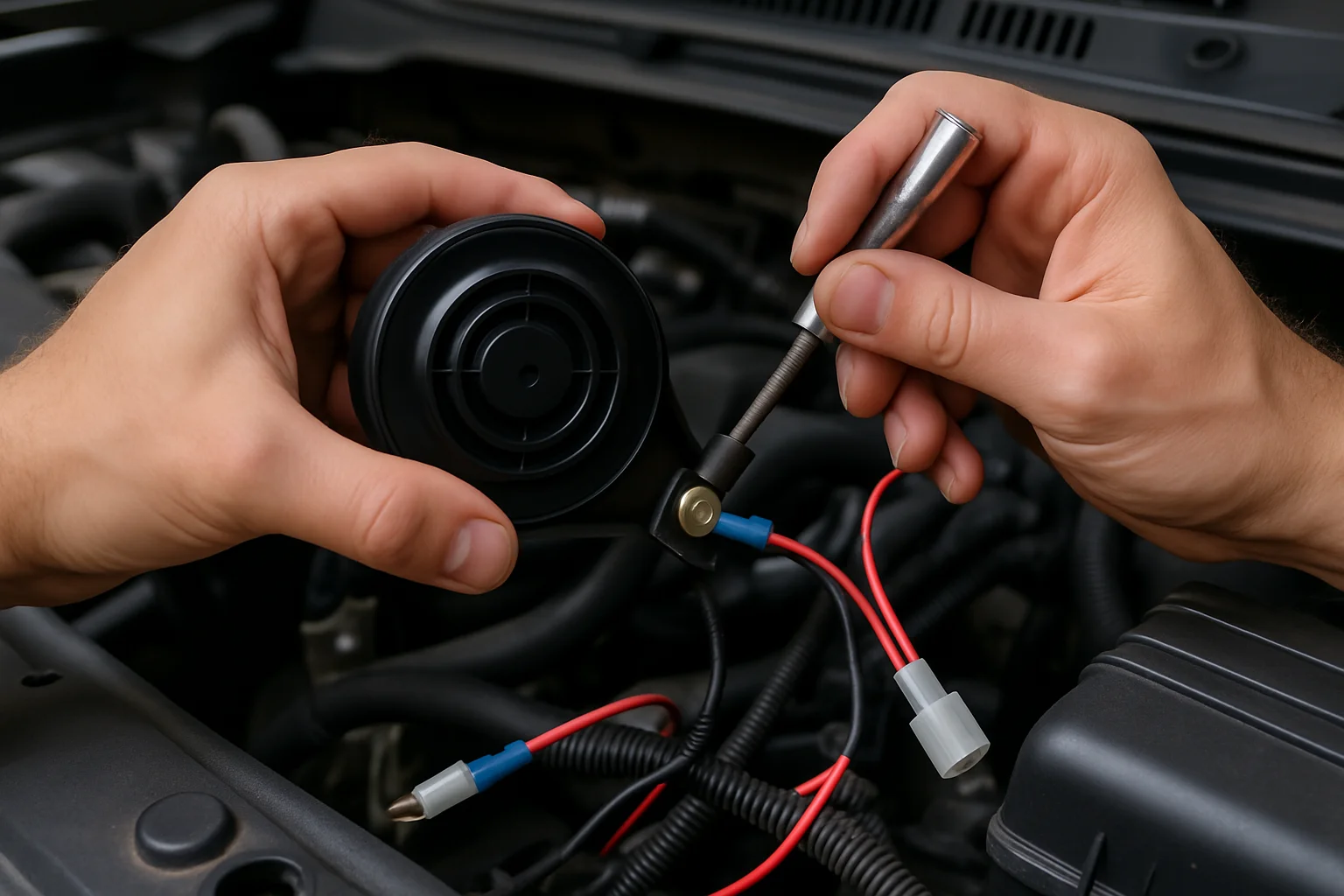
Compliance Checklist
-
Purchasing Guide: Requirement Certification CCC/E-mark/SAE label Volume rating 90-115dB for China Vehicle type Match to car/motorcycle Manufacturer Reputable brand -
Installation Best Practices:
- Mount facing forward, not downward
- Keep 30cm minimum from heat sources
- Use included brackets (don't improvise)
- Ensure waterproof connections
- Maintain original wiring gauge
-
Common Mistakes: Error Consequence No relay added Burned switch Install 30A relay Wrong position Muffled sound Follow OEM location Mixed tones Illegal in China Use single-tone Poor grounding Intermittent operation Clean contact points -
Maintenance Tips:
- Clean contacts annually
- Check mounting bolts every 2 years
- Test monthly (short bursts)
- Replace every 5-7 years
- Watch for corrosion in coastal areas
Conclusion
Understanding these regulations prevents legal issues while ensuring your horn remains effective. For certified automotive horns, contact info@jindongauto.com.
Our Guarantee: All horns meet Chinese and international standards. Visit www.jingdongparts.com for compliant products.