

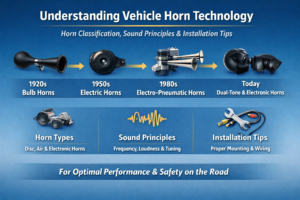
That startling moment when a horn saves you from an accident makes you appreciate this often-overlooked safety component more than ever before.
Understanding horn classifications, sound production principles, and proper installation methods ensures optimal performance of this critical vehicle safety device across all driving conditions.
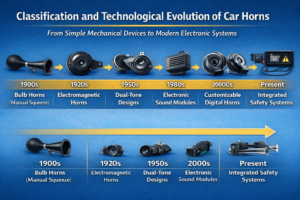
Classification and Technological Evolution of Car Horns
From simple mechanical devices to modern electronic systems, car horns have undergone significant technological transformation while maintaining their core safety function.
Historical development timeline:
- 1900s: Bulb horns (manual squeeze)
- 1920s: Electromagnetic horns
- 1950s: Dual-tone designs
- 1980s: Electronic sound modules
- 2000s: Customizable digital horns
- Present: Integrated safety systems
Modern Horn Classification System
| Type | Mechanism | Volume Range | Typical Use | Evolution Stage |
|---|---|---|---|---|
| Electromagnetic | Vibrating diaphragm | 100-125dB | Standard vehicles | 3rd Generation |
| Air Horn | Compressed air | 120-150dB | Trucks/buses | 2nd Generation |
| Electronic | Sound chip | 90-115dB | Luxury vehicles | 4th Generation |
| Hybrid | Electropneumatic | 110-130dB | Premium SUVs | Current Tech |
| Digital | Programmable | 95-120dB | Custom builds | Emerging Tech |
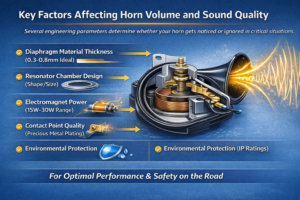
Key Factors Affecting Horn Volume and Sound Quality
Several engineering parameters determine whether your horn gets noticed or ignored in critical situations.
Critical performance factors:
- Diaphragm material thickness (0.3-0.8mm ideal)
- Resonator chamber design (shape/size)
- Electromagnet power (15W-30W range)
- Contact point quality (precious metal plating)
- Environmental protection (IP ratings)
Technical Specifications Impact
| Parameter | Low Quality | High Quality | Effect |
|---|---|---|---|
| Diaphragm | Basic steel | Titanium alloy | +300% lifespan |
| Coil | Copper-clad | Pure copper | +25% efficiency |
| Contacts | Nickel | Rhodium | +500% cycles |
| Housing | Plastic | ABS composite | +10x impact resist |
| Seal | Basic | IP67 rated | Waterproof |
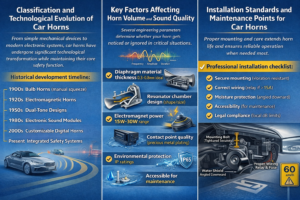
Installation Standards and Maintenance Points for Car Horns
Proper mounting and care extends horn life and ensures reliable operation when needed most.
Professional installation checklist:
✓ Secure mounting (vibration-resistant)
✓ Correct wiring (relay if >15A)
✓ Moisture protection (angled downward)
✓ Accessibility (for maintenance)
✓ Legal compliance (local dB limits)
Maintenance Schedule Table
| Task | Frequency | Tools Needed | Warning Signs |
|---|---|---|---|
| Sound check | Monthly | None | Weak/raspy tone |
| Connection check | Quarterly | Multimeter | Intermittent operation |
| Cleaning | Biannual | Compressed air | Corrosion visible |
| Mount inspection | Annual | Wrench set | Loose brackets |
| Full test | Every 2 years | Decibel meter | <90% output |
Conclusion
Mastering horn technology fundamentals enables better selection, installation and maintenance of these vital automotive safety components.