
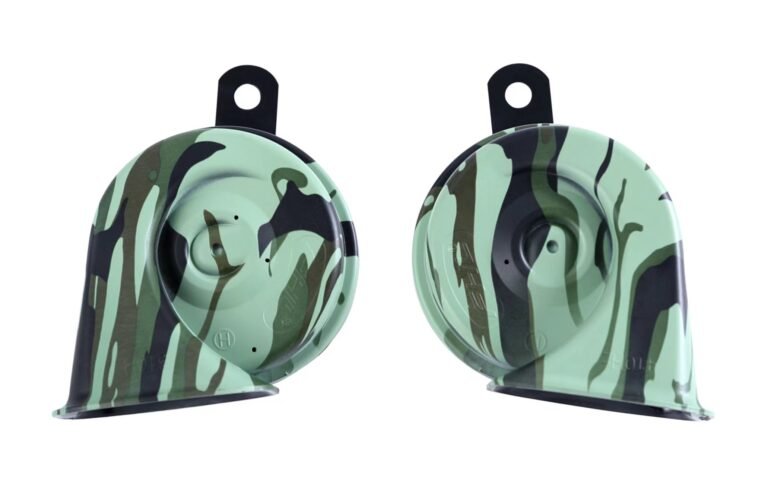
Horns aren't one-size-fits-all. The distinct needs of motorcycles and cars demand specialized solutions. Understanding these differences helps choose or design the right horn for each vehicle.
Motorcycle horns require 20-30% higher decibels than car horns to overcome wind noise, yet must maintain compact sizes 60% smaller than automotive units - creating unique engineering challenges in power-to-size ratios.
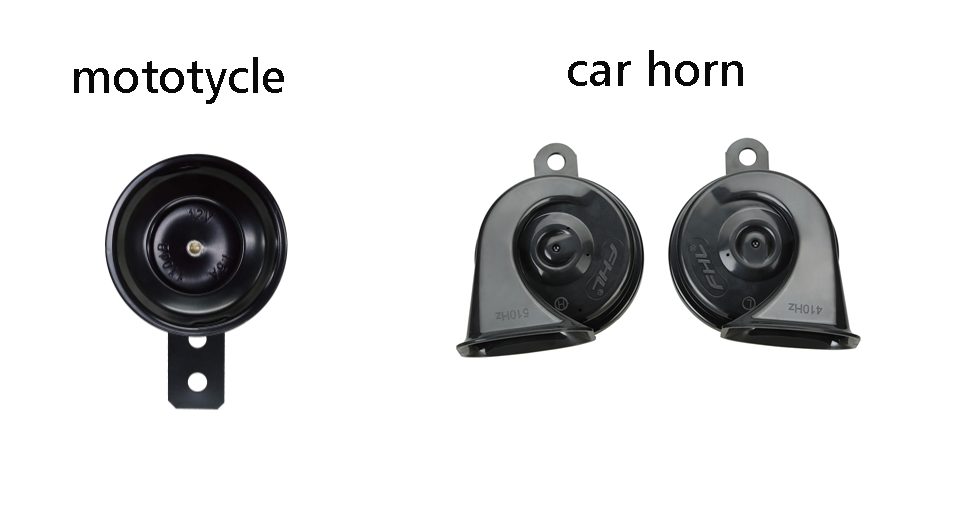
Let's examine how these vehicle-specific needs shape horn design and performance.
Usage Environment Differences – Speed, Noise Background
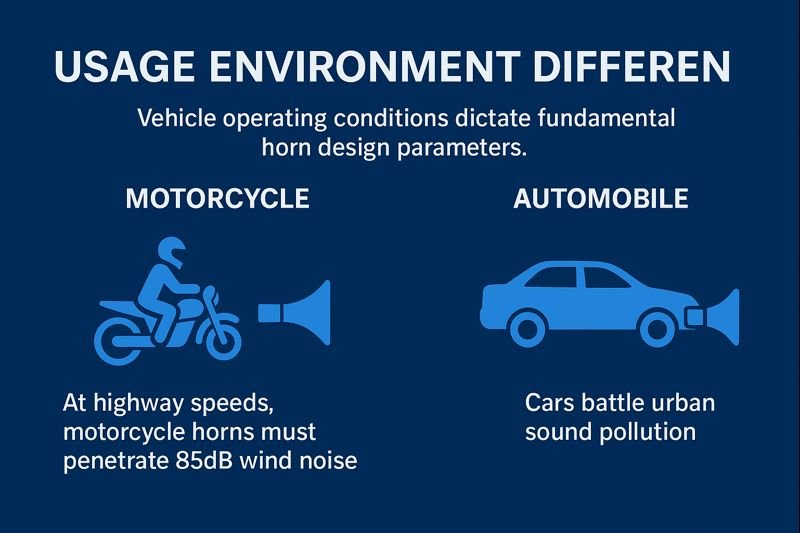
Vehicle operating conditions dictate fundamental horn design parameters. Road dynamics vary dramatically between motorcycles and automobiles.
At highway speeds, motorcycle horns must penetrate 85dB wind noise while cars battle urban sound pollution - resulting in motorcycle horns prioritizing directional projection while car horns emphasize omnidirectional sound distribution.
Environmental Factor Comparison
-
Noise Challenges: Factor Motorcycle Concern Wind noise 65-85dB at speed Minimal impact Engine sound Competing with exhaust Isolated cabin Traffic noise Need to stand out Blending appropriately Weather Exposure to elements Protected location -
Usage Patterns:
- Motorcycle: Frequent short bursts (lane splitting)
- Car: Occasional longer honks (traffic situations)
- Motorcycle: 300-500 activations/month
- Car: 100-200 activations/month
-
Design Solutions:
- Motorcycle: Focused high-frequency tones
- Car: Lower frequency broader dispersion
- Motorcycle: Waterproof extreme duty
- Car: Moderate weather protection
Power and Tone Design – Suitable for Different Vehicle Types
Electrical systems and acoustic needs create divergent design paths for two-wheel versus four-wheel applications.
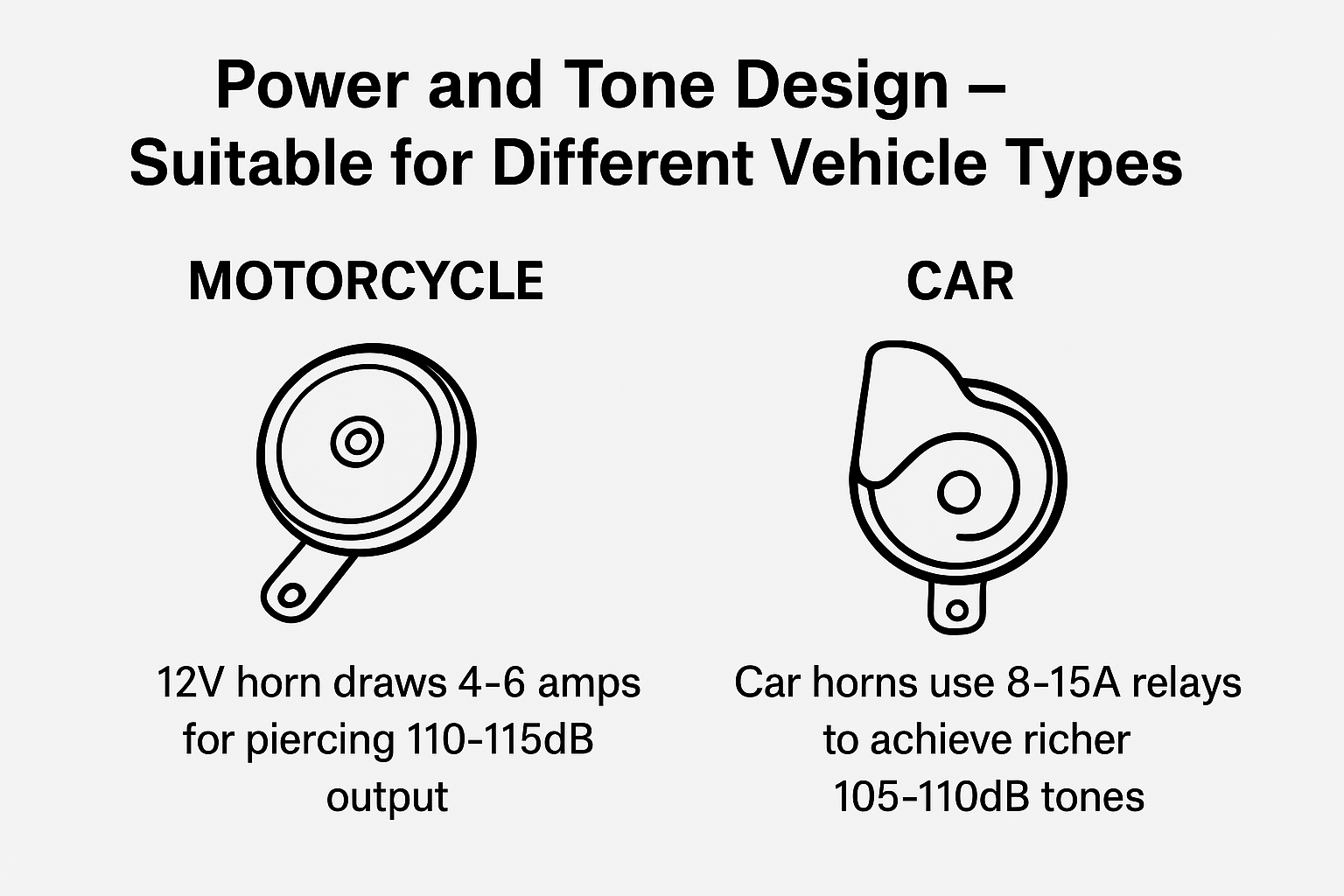
Our tests show 12V motorcycle horns draw 4-6 amps for piercing 110-115dB output, while car horns use 8-15A relays to achieve richer 105-110dB tones - demonstrating how power utilization differs by vehicle class.
Technical Specification Comparison
-
Performance Metrics: Parameter Motorcycle Standard Decibel level 110-115dB 105-110dB Frequency 400-500Hz 300-400Hz Current draw 4-6A 8-15A Sound pattern Sharp staccato Sustained tone -
Component Differences:
- Motorcycle: Compact electromagnetic design
- Car: Larger air compressor types
- Motorcycle: Single or dual compact horns
- Car: Multiple horn combinations
-
Tone Psychology: Vehicle Desired Effect Motorcycle Immediate attention High-pitched Car Authority/warning Low-frequency Motorcycle Lane positioning Distinctive Car General alert Conventional
Installation Method Comparison – Convenience and Stability
Mounting constraints create another key differentiation point between motorcycle and automotive horn implementations.
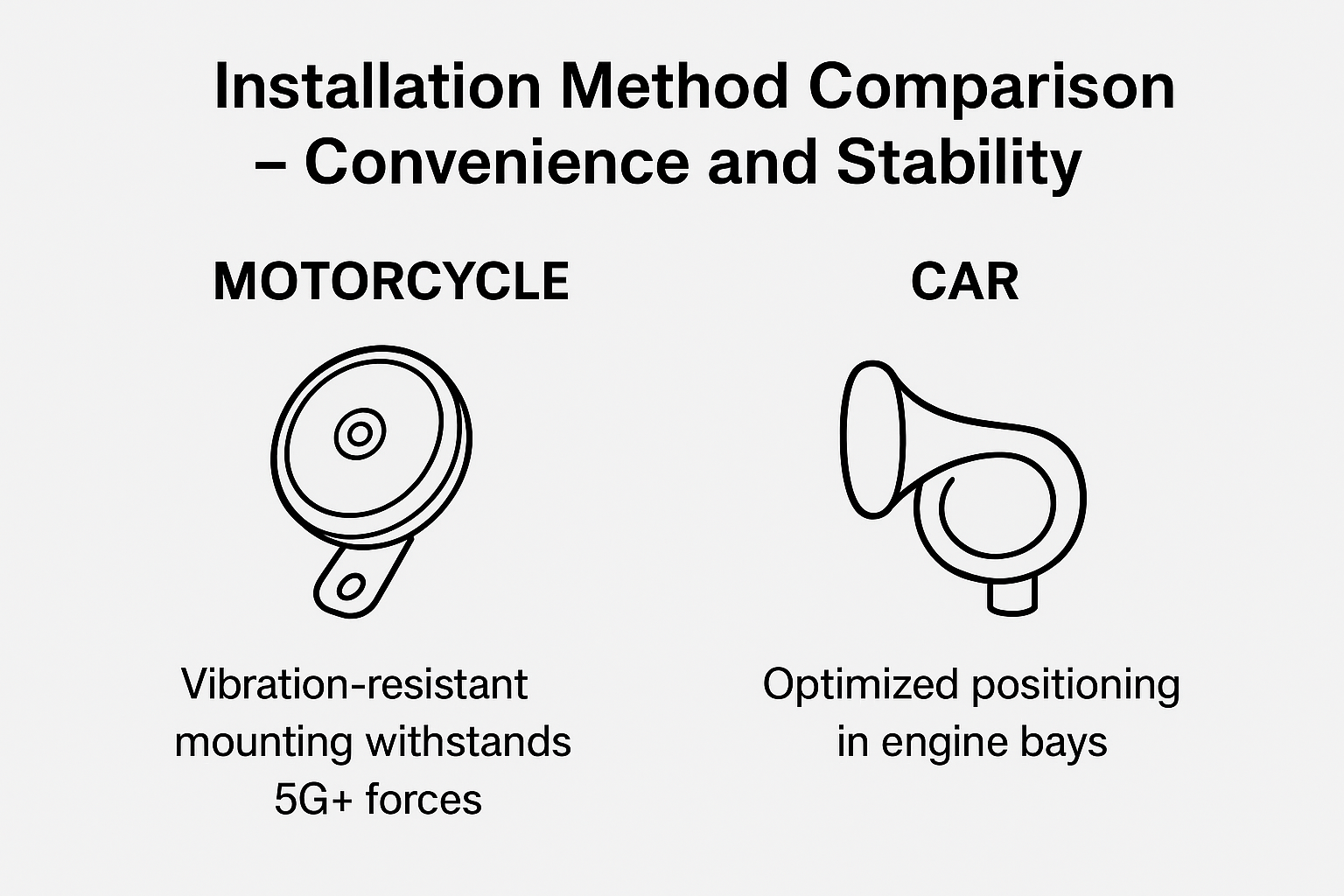
Motorcycle horns require vibration-resistant mounting that withstands 5G+ forces, while car horns need optimized positioning in engine bays - leading to motorcycle brackets being 35% heavier relative to horn size for stability.
Installation Requirements
-
Mounting Challenges: Consideration Motorcycle Solution Vibration Rubber-isolated Direct bolt-on Space Compact footprint Standard sizing Accessibility Tool-free removal Professional install Orientation Adjustable angle Fixed position -
Typical Locations:
- Motorcycle: Behind fairings/front forks
- Car: Front radiator area
- Motorcycle: Often visible
- Car: Usually hidden
-
Installation Time:
- Motorcycle: 15-30 minutes
- Car: 30-60 minutes
- Motorcycle: DIY common
- Car: Professional preferred
-
Customization Options:
- Motorcycle: Multiple horn arrangements
- Car: OEM replacement focus
- Motorcycle: Styling considerations
- Car: Performance emphasis
Conclusion
Understanding these design differences ensures proper horn selection. For vehicle-specific horn solutions, contact info@jindongauto.com.
Our Specialty: Custom OEM horns tailored to your vehicle type. Visit www.jingdongparts.com for specifications.