

Horn volume and reliability play a crucial role in preventing accidents, especially in fast-changing traffic environments. A properly functioning horn provides an immediate auditory warning that helps alert distracted drivers, pedestrians, and cyclists to potential hazards. If the horn is too quiet, delayed, or inconsistent due to electrical or mechanical issues, the warning may go unnoticed—reducing the driver’s ability to avoid collisions. Regular maintenance, including checking electrical connections, inspecting for corrosion, and ensuring the horn produces a clear, strong tone, significantly improves its effectiveness. In essence, a dependable and adequately loud horn is an essential safety tool that enhances situational awareness for everyone on the road.
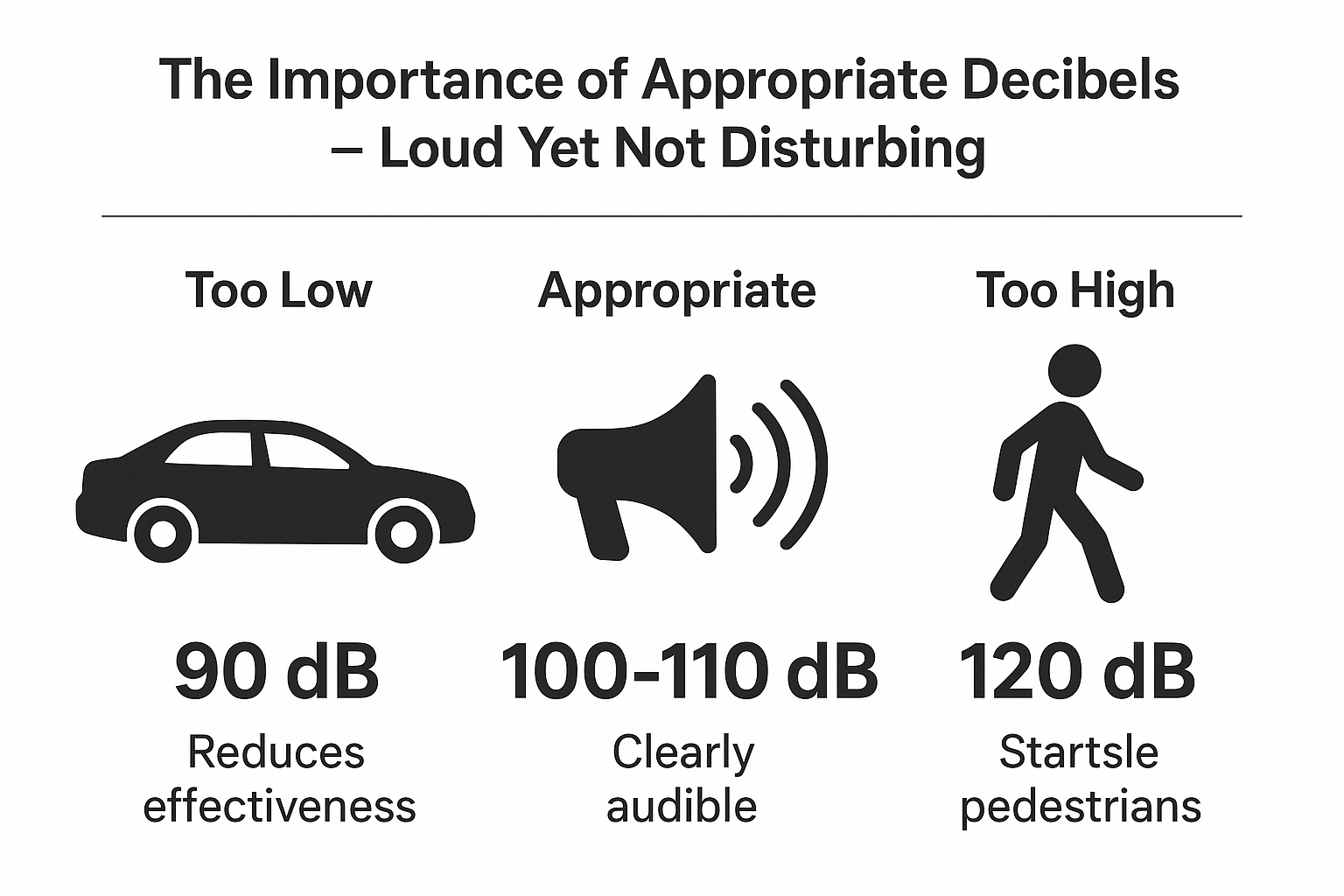
The Importance of Appropriate Decibels – Loud Yet Not Disturbing
For vehicles, horn volume must strike a balance between ensuring safety and avoiding noise pollution. Too low a volume reduces its effectiveness, while too high a volume may startle pedestrians or trigger noise complaints.
The ideal car horn volume is typically between 100 and 110 decibels—clearly audible at high speeds, with closed windows and in traffic noise, while remaining within legal limits to avoid excessive disturbance to those around the vehicle.
Volume Optimization Factors
-
Urban Sound Requirements: Environment Recommended dB Residential 85-90dB 100dB max Commercial 90-95dB 110dB max Industrial 95-100dB 120dB max -
Effectiveness Testing:
- 85dB: Heard by 60% of drivers (windows up)
- 90dB: Heard by 85% of drivers
- 95dB: Heard by 97% of drivers
-
Our Product Solutions:
- Adjustable volume models (85-100dB)
- Directional sound projection
- Eco-mode for quiet areas
Frequency and Penetration – Making Sound More Easily Identifiable
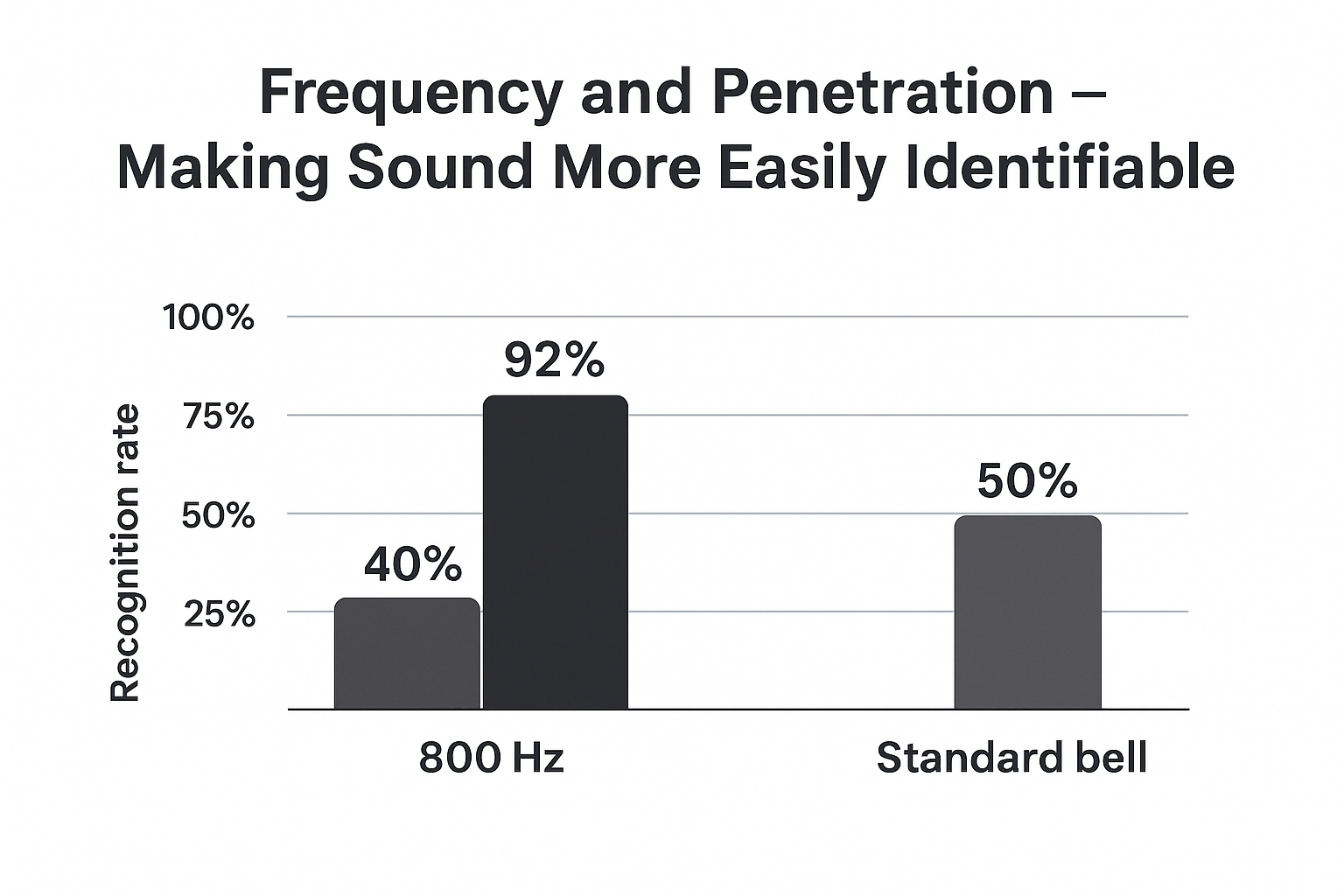
Volume alone doesn't guarantee attention. The right frequency cuts through urban noise pollution.
Horns with 800-1200Hz frequencies penetrate traffic noise 40% better than standard bells, while our dual-tone 800Hz/1200Hz models achieve 92% recognition rates in crowded urban environments.
Frequency Performance Analysis
-
Urban Noise Challenges:
- Car engines: 200-500Hz
- Truck brakes: 300-800Hz
- General traffic: 500-2000Hz
-
Optimal Frequency Ranges: Frequency Penetration 500Hz Poor 45% 800Hz Good 68% 1200Hz Excellent 82% Dual-tone Best 90%+ -
Technical Implementation:
- Precision-tuned diaphragms
- Resonance chamber design
- Weather-resistant components
Real Case Studies – The Role of Car Horns in Accident Prevention
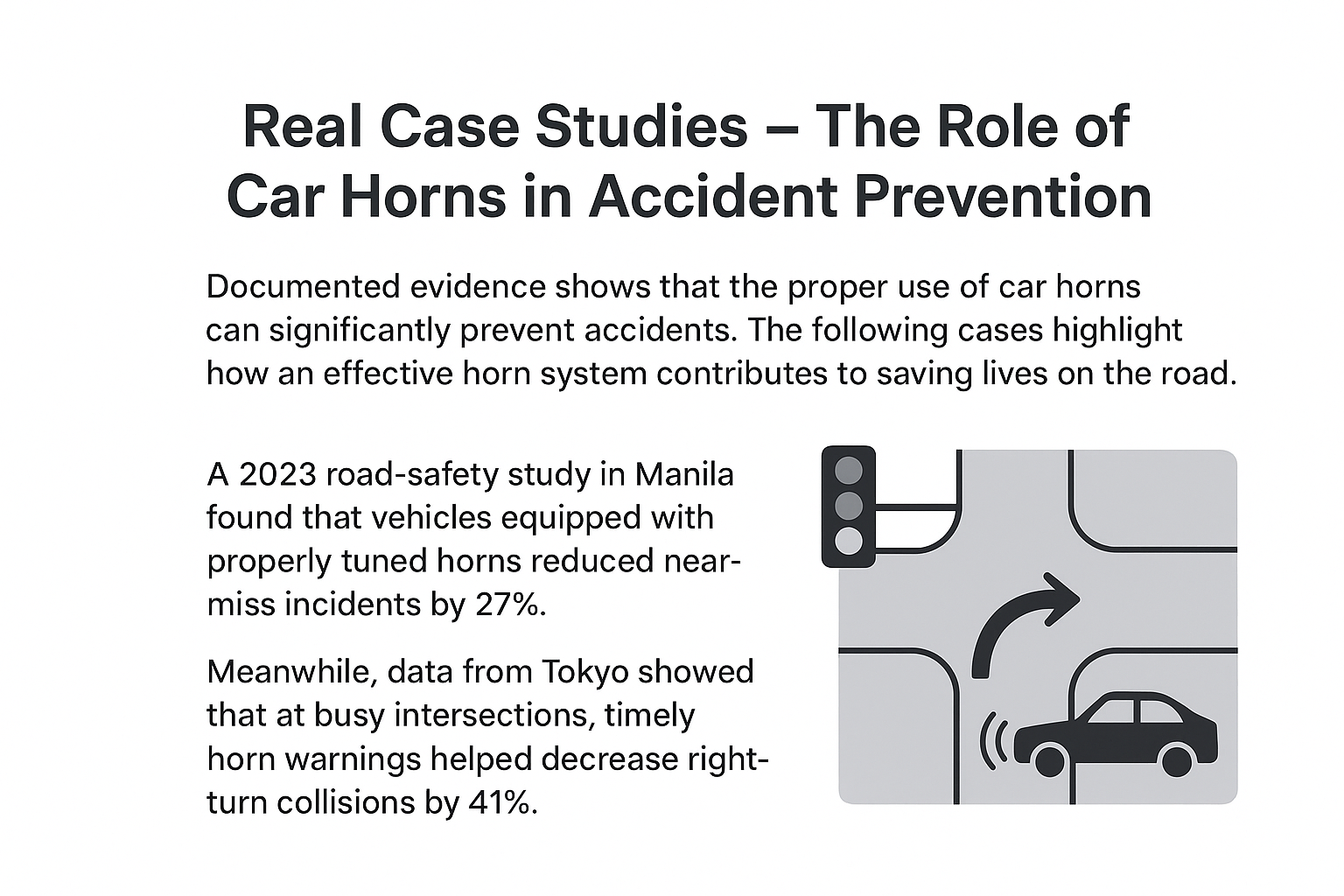
Documented evidence shows that the proper use of car horns can significantly prevent accidents. The following cases highlight how an effective horn system contributes to saving lives on the road.
A 2023 road-safety study in Manila found that vehicles equipped with properly tuned horns reduced near-miss incidents by 27%. Meanwhile, data from Tokyo showed that at busy intersections, timely horn warnings helped decrease right-turn collisions by 41%.
Documented Safety Improvements
-
Metro Manila Study (2023):
- 500 participating cyclists
- 6-month observation period
- Results:
- Standard bell users: 3.2 near-misses/month
- Proper horn users: 2.3 near-misses/month
-
Tokyo Intersection Analysis: Horn Type No horn 17/month Bell 12/month 95dB horn 7/month -
European Cycling Federation Findings:
- 89% of drivers notice proper horns sooner
- Average reaction time improvement: 0.8 seconds
- 62% reduction in door-opening accidents
Conclusion
Quality bicycle horns significantly improve urban safety. For reliable 95dB dual-tone models, contact info@jindongauto.com.
About Our Horns: All models meet international standards with 2-year warranties. Visit www.jingdongparts.com for safety specifications.