

Car horns serve as critical safety devices, but their loudness must balance effectiveness with social responsibility. This guide explores the complex factors governing horn volume.
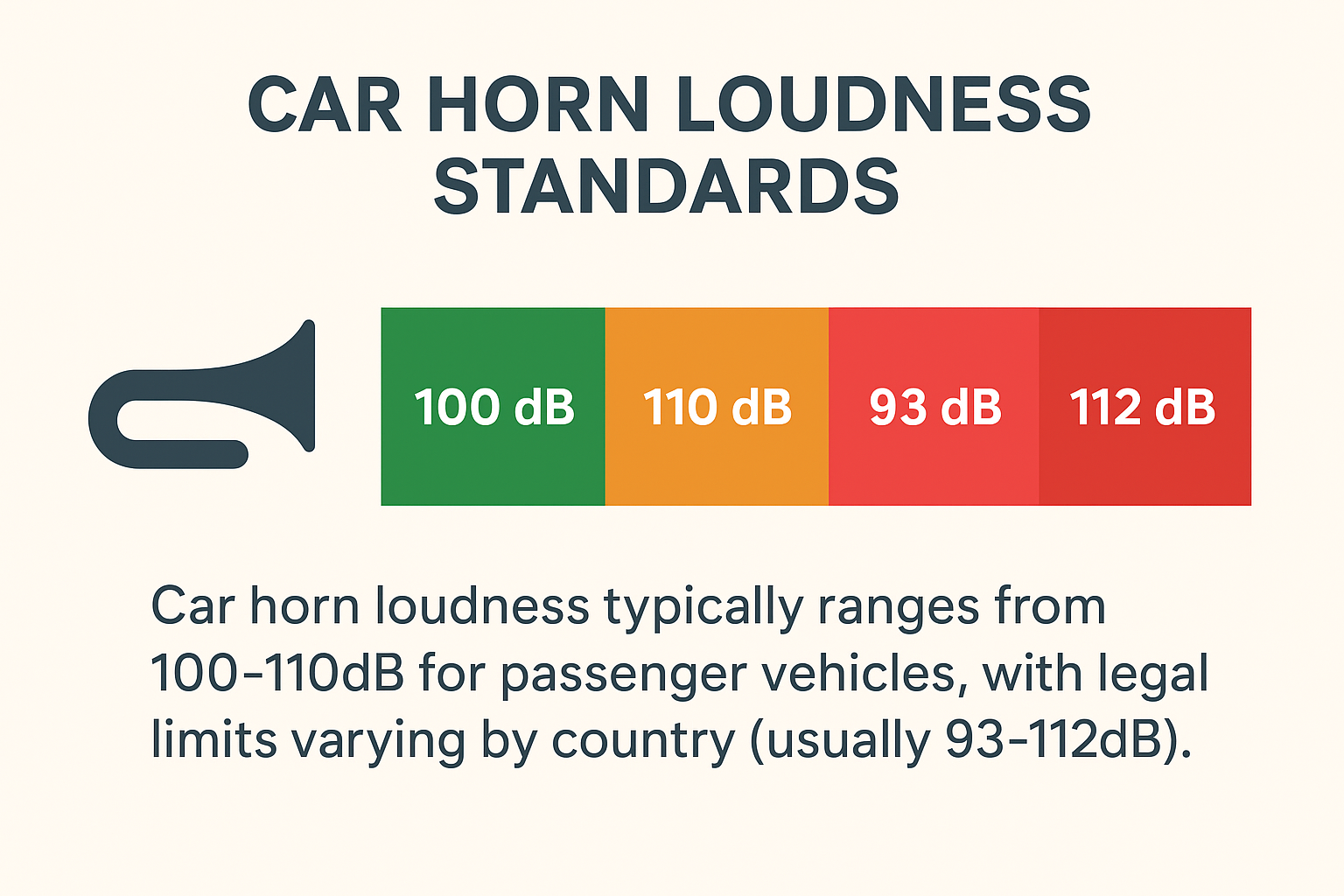
Car horn loudness typically ranges from 100-110dB for passenger vehicles, with legal limits varying by country (usually 93-112dB) - manufacturers must balance audibility with noise pollution concerns while meeting strict safety standards.
Legal and Safety Considerations
Governments worldwide regulate horn loudness to ensure road safety while protecting public health. These laws directly impact horn design and manufacturing standards.
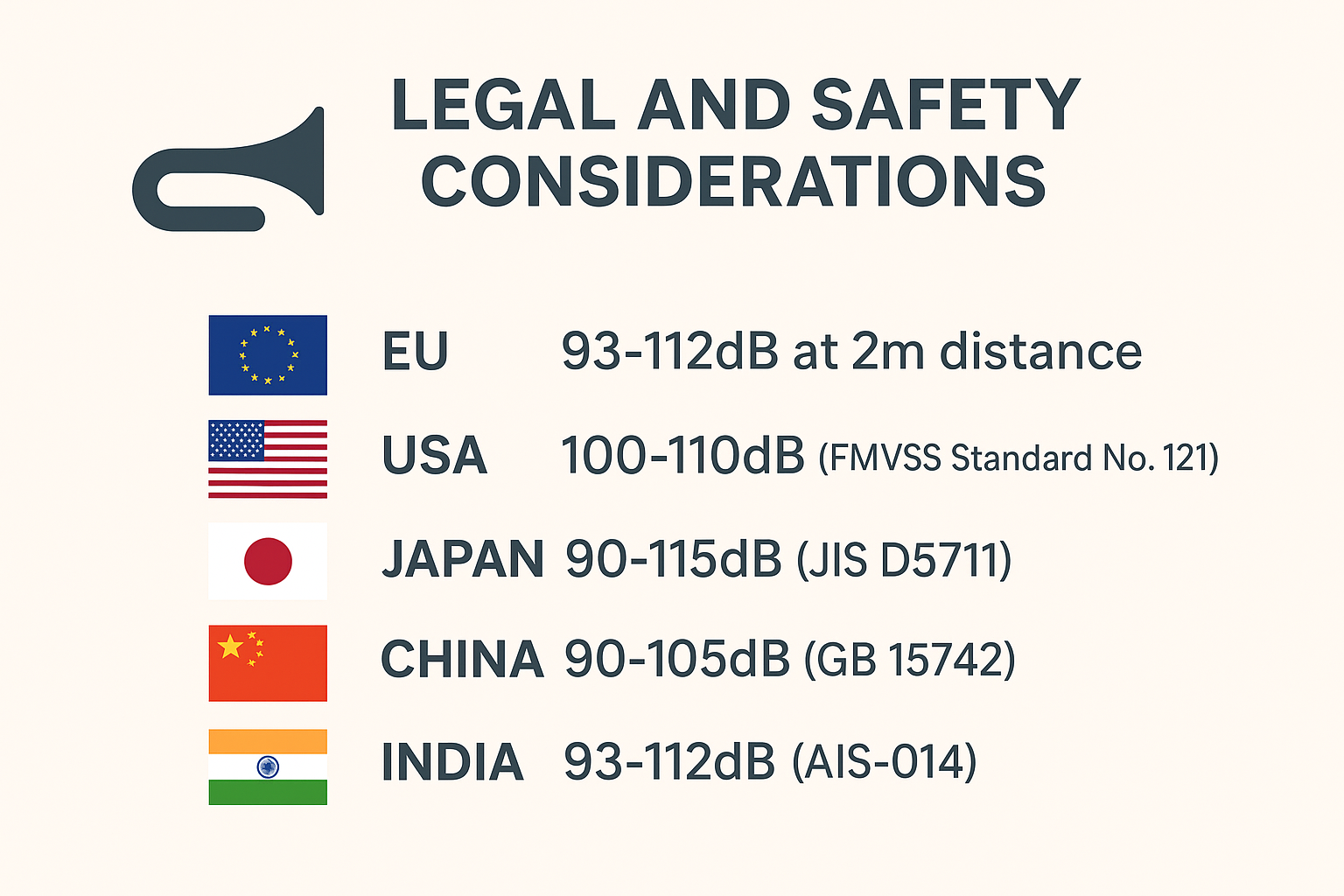
Key legal requirements:
- EU: 93-112dB at 2m distance
- USA: 100-110dB (FMVSS Standard No. 121)
- Japan: 90-115dB (JIS D5711)
- China: 90-105dB (GB 15742)
- India: 93-112dB (AIS-014)
Safety vs Regulation Balance
| Factor | Safety Need | Legal Limit | Engineering Challenge |
|---|---|---|---|
| Volume | Must overcome traffic noise | Maximum dB limits | Efficient sound projection |
| Frequency | Should cut through engine sounds | Banned frequencies | Tone optimization |
| Duration | Need sustained warning capability | Maximum blast duration | Thermal management |
| Direction | Focused forward projection | Omnidirectional requirements | Horn trumpet design |
| Reliability | Must work in all conditions | Minimum performance standards | Weatherproof construction |
Critical considerations:
- Emergency vehicle exemptions
- Urban vs rural differences
- Vehicle class variations
- Enforcement challenges
- International trade compliance
Social and Environmental Impact
Excessive horn use creates significant noise pollution, especially in dense urban areas, leading to health impacts and community annoyance.
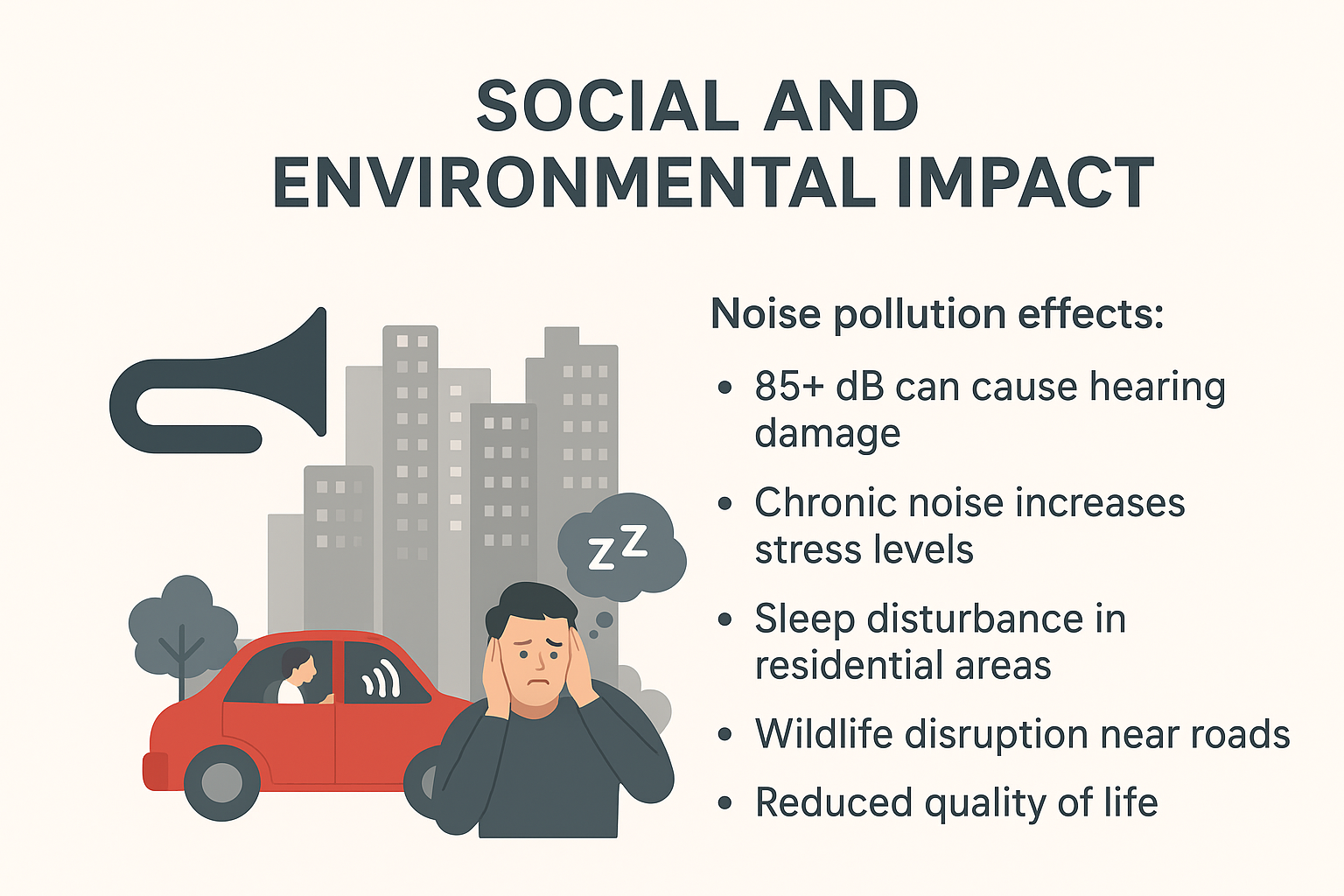
Noise pollution effects:
- 85+ dB can cause hearing damage
- Chronic noise increases stress levels
- Sleep disturbance in residential areas
- Wildlife disruption near roads
- Reduced quality of life
Horn Use Impact Comparison
| Scenario | Sound Level | Duration | Community Impact | Mitigation Strategies |
|---|---|---|---|---|
| Normal traffic | 70-85dB | Continuous | Moderate | Road design improvements |
| Occasional horn | 100dB | 1-2 sec | Low | Driver education |
| Frequent honking | 100+dB | Repeated | High | Noise barriers |
| Emergency vehicles | 120dB | Intermittent | Accepted | Route planning |
| Modified horns | 130+dB | Variable | Extreme | Strict enforcement |
Reduction approaches:
- Sound-dampening materials
- Directional horn designs
- Smart volume adjustment
- Urban quiet zones
- Public awareness campaigns
Technology and Comparative Insights
Modern horn technology continues evolving to meet competing demands for effectiveness, compliance, and environmental responsibility.
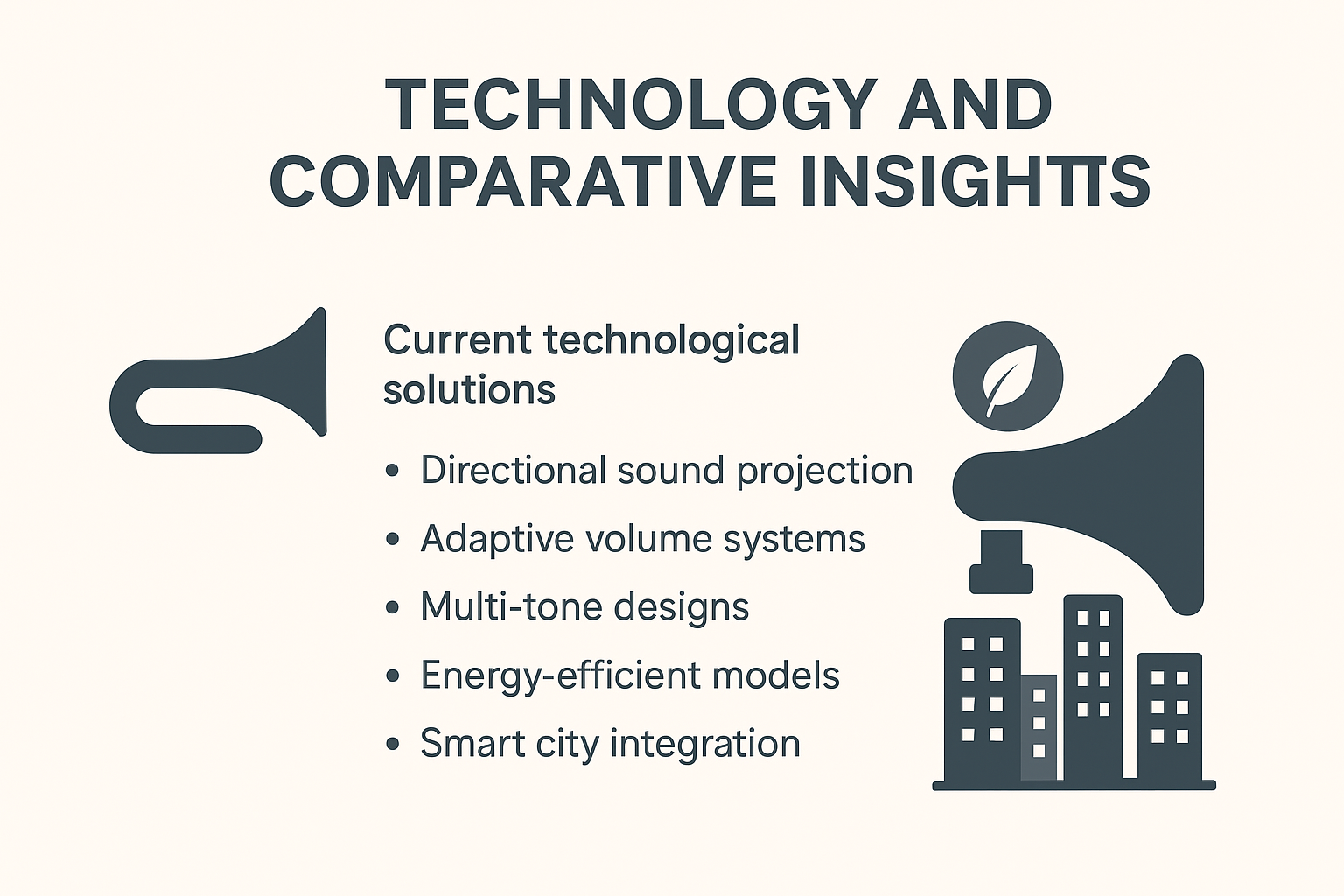
Current technological solutions:
- Directional sound projection
- Adaptive volume systems
- Multi-tone designs
- Energy-efficient models
- Smart city integration
Horn Technology Comparison
| Technology | Volume Range | Advantages | Limitations | Best Applications |
|---|---|---|---|---|
| Electromagnetic | 100-110dB | Reliable, compact | Limited volume | Passenger vehicles |
| Air horn | 120-150dB | Very loud | Large size, maintenance | Trucks, emergency |
| Electronic | 90-115dB | Programmable | Complex installation | Luxury vehicles |
| Hybrid systems | 105-125dB | Balanced performance | Higher cost | Commercial fleets |
| Directional | 95-110dB | Reduced pollution | Specific mounting | Urban vehicles |
Emerging trends:
- Vehicle-to-vehicle alerts
- Pedestrian warning systems
- Predictive collision alerts
- Eco-friendly materials
- Solar-powered options
Conclusion
Car horn loudness represents a careful engineering compromise between safety requirements, legal compliance, and social responsibility - with technology continually evolving to better balance these needs.
TIAN
FHL GBSY JS-TECH Automotive Safety
info@jindongauto.com
www.jingdongparts.com
Precision Engineering · Safety First · Reliable Performance