
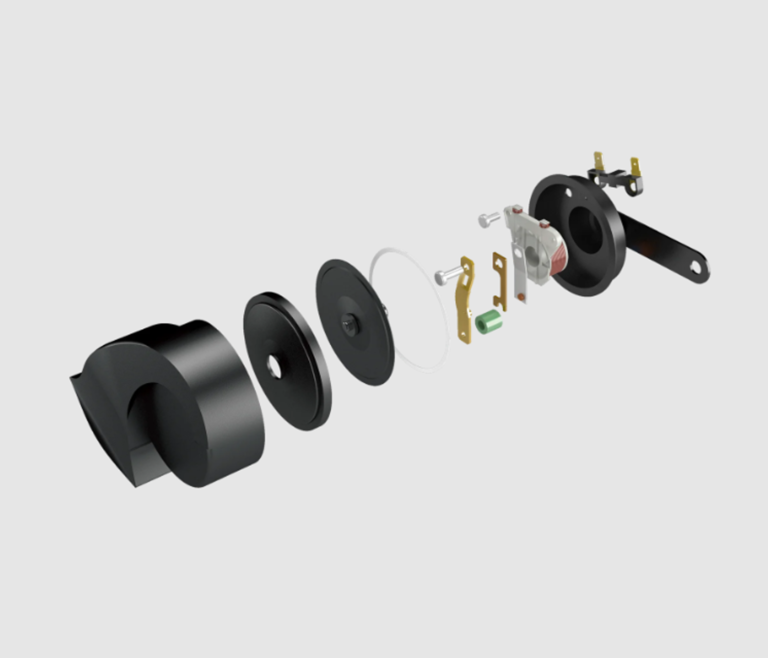
Every driver relies on their horn for safety, but few understand the engineering behind this crucial component. Let's explore what makes your car's warning system work.
Car horns operate through electromagnetic vibration - when current flows through a coil, it creates a magnetic field that rapidly moves a diaphragm, producing sound waves that travel through a horn-shaped amplifier to create the audible warning we recognize (typically between 100-110dB at 2 meters distance).

Understanding these mechanisms helps explain why some horns perform better than others in critical situations.
How is Sound Produced? — The Basic Principles of a Horn
The magic begins with simple electromagnetic physics transforming electrical energy into audible warnings. Here's what happens inside every horn when you press the button.
Sound generation starts when 12V current energizes an electromagnet, pulling a steel diaphragm inward - the attached contact breaker instantly cuts power, releasing the diaphragm to spring back, creating rapid vibrations (typically 250-550Hz) that produce the characteristic warning tone through this continuous on-off cycle.
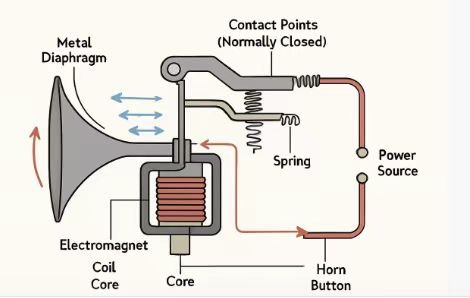
Core Components and Their Functions
-
Energy Conversion System: Component Material Electromagnet Copper coil Creates magnetic field Armature Steel plate Transmits motion Diaphragm Spring steel Vibrates to make sound -
Vibration Cycle:
- Step 1: Current activates electromagnet
- Step 2: Diaphragm gets pulled inward
- Step 3: Contact breaker interrupts circuit
- Step 4: Diaphragm springs back
- Step 5: Cycle repeats 250-550 times/second
-
Critical Measurements: Parameter Typical Value Frequency 250-550Hz Determines pitch Current 3-5A Power consumption Response Time <0.1s Emergency effectiveness
From Diaphragm to Sound Waves — The Signal Transmission Process
The vibration inside the horn is just the beginning. The real engineering challenge lies in effectively projecting these sound waves to surrounding vehicles.
The diaphragm's vibrations travel through an acoustic transformer (horn-shaped amplifier) that matches the high-pressure vibration source to low-pressure air, increasing efficiency by up to 300% compared to flat speakers - this is why proper horn shape and length dramatically affect projection distance and clarity.

Acoustic Engineering Breakdown
-
Wave Amplification Process: Stage Function Vibration source Diaphragm movement Material stiffness Pressure chamber Builds sound pressure Volume precision Horn flare Directs sound waves Expansion ratio -
Horn Design Variations:
- Straight horns: Better for high frequencies
- Spiral horns: Compact but effective
- Trumpet horns: Classic long-range projection
-
Performance Metrics: Measurement Good Horn Projection 50m clear <30m muffled Dispersion 120° arc 60° narrow Distortion <3% >15%
Why Are There Such Significant Differences in Sound Quality? — Key Parameter Analysis
Not all horns are created equal. Multiple engineering factors combine to determine why some horns sound crisp while others seem weak or distorted.
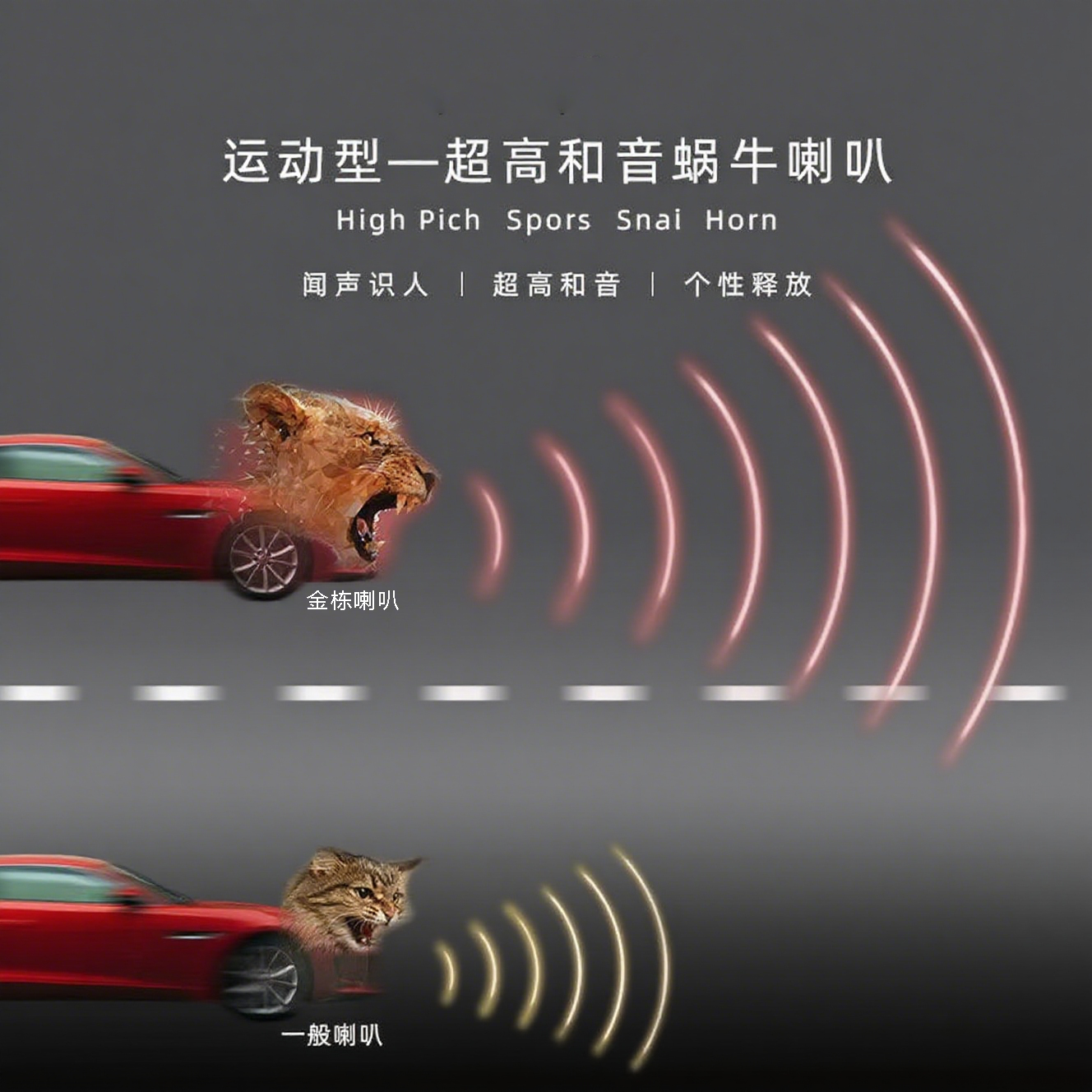
Premium horns use precisely tuned resonance chambers (within 0.1mm tolerance) and specialty alloys for diaphragms that maintain consistent vibration patterns - combined with optimized electromagnetic circuits, this delivers up to 40% clearer sound with 50% less power consumption than budget alternatives, explaining the dramatic quality differences.
Critical Quality Determinants
-
Material Science Factors: Component Premium Choice Diaphragm Titanium alloy Regular steel Coil Oxygen-free copper Aluminum-clad Housing Marine-grade alloy Plastic-coated -
Manufacturing Precision:
-
Tolerance levels: Part Premium Chamber ±0.1mm ±0.5mm Coil winding CNC-wound Hand-wound Mounting Laser-aligned Manual fit
-
-
Performance Impact: Feature Quality Benefit Tight tolerances Consistent tone +15% price Premium materials Longer lifespan +20% cost Advanced R&D Better projection +25% value
Conclusion
Understanding horn technology helps make informed choices for vehicle safety. For premium OEM-quality horns, contact info@jindongauto.com.
About Jindong Horns: We engineer acoustic safety solutions combining German precision with Chinese manufacturing excellence. Visit www.jingdongparts.com for technical specifications.