
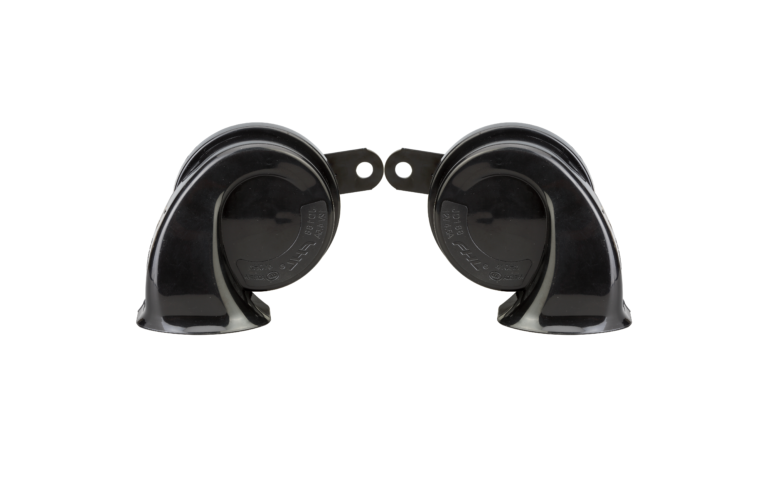
That sudden blast of your car horn serves many purposes beyond just expressing frustration - it's actually a vital communication tool for drivers worldwide.
Car horns are primarily safety devices used to alert others of danger, but they also serve as communication tools, emotional outlets, and cultural signals depending on the driving environment and situation.
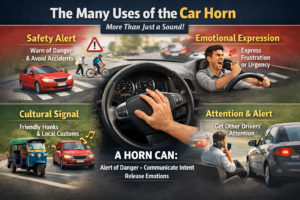
Using Car Horns for Safety and Communication
The original purpose of car horns remains their most important function - preventing accidents and communicating with other road users.
Proper safety uses include:
- Warning of impending collision
- Alerting distracted pedestrians
- Signaling lane changes on highways
- Notifying drivers of open car doors
- Warning of hazardous road conditions
- Communicating with large vehicle blind spots
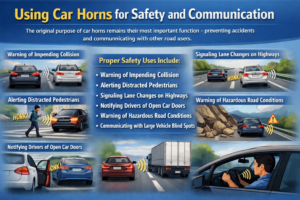
Recommended Horn Use Cases
| Situation | Appropriate Response | Recommended Duration |
|---|---|---|
| Pedestrian stepping into road | Short beep | 0.5 seconds |
| Car drifting into your lane | Two short beeps | 0.5s x 2 |
| Light turning green (car not moving) | Very brief tap | 0.25 seconds |
| Animal on roadway | Long blast | 2+ seconds |
| Emergency warning | Repeated honking | Until danger passes |
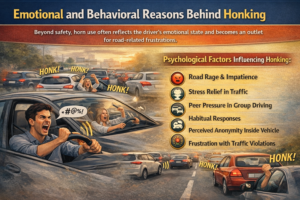
Emotional and Behavioral Reasons Behind Honking
Beyond safety, horn use often reflects the driver's emotional state and becomes an outlet for road-related frustrations.
Psychological factors influencing honking:
- Road rage and impatience
- Stress relief in traffic
- Peer pressure in group driving
- Habitual responses
- Perceived anonymity inside vehicle
- Frustration with traffic violations
Honking Behavior Analysis
| Emotion | Typical Honking Pattern | Common Triggers |
|---|---|---|
| Anger | Long, aggressive blasts | Cutting off, slow drivers |
| Impatience | Repeated short bursts | Traffic lights, slow mergers |
| Anxiety | Sudden panic honks | Near misses, surprises |
| Celebration | Rhythmic patterns | Weddings, sports events |
| Peer Pressure | Group honking | Convoys, protests |
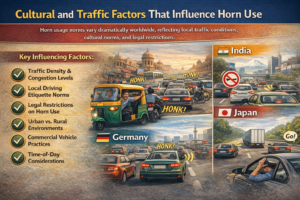
Cultural and Traffic Factors That Influence Horn Use
Horn usage norms vary dramatically worldwide, reflecting local traffic conditions, cultural norms, and legal restrictions.
Key influencing factors:
- Traffic density and congestion levels
- Local driving etiquette norms
- Legal restrictions on horn use
- Urban vs. rural environments
- Commercial vehicle practices
- Time-of-day considerations
 //placehold.co/600x400 "Global Horn Use")
International Horn Use Comparison
| Country/City | Typical Horn Frequency | Primary Usage | Legal Restrictions |
|---|---|---|---|
| New York, USA | Moderate | Safety/anger | Night restrictions |
| Mumbai, India | Very frequent | Communication | Rarely enforced |
| Tokyo, Japan | Rare | Emergency only | Strictly enforced |
| Rome, Italy | Frequent | Emotional | Some restrictions |
| Cairo, Egypt | Constant | Navigation | Minimal enforcement |
Conclusion
Car horns serve multiple functions from critical safety warnings to emotional expressions, with usage patterns varying by culture, traffic conditions, and driver psychology.
TIAN
FHL GBSY JS-TECH Automotive Safety
info@jindongauto.com
www.jingdongparts.com
Precision Engineering · Safety First · Reliable Performance