
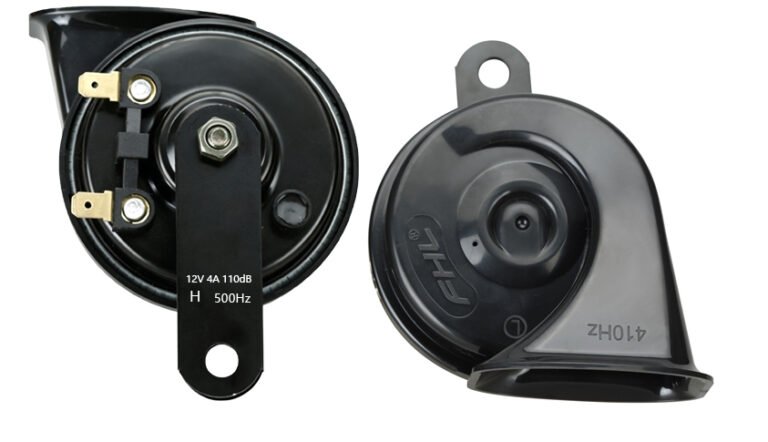
You are preparing to import a shipment of automotive horns. The supplier has confirmed the price, production is complete, and the goods are almost ready for shipping. Then your customs broker asks a simple question: What is the correct HS code for the car horns?
An incorrect answer could lead to customs declaration amendments, unexpected duties, additional inspections, or delivery delays.
For automotive parts importers, distributors, wholesalers, and OEM buyers, understanding car horn HS codes is an important part of international procurement. However, customs classification is only one consideration. Import duties, country of origin, product compliance, documentation, and shipping arrangements also affect the total cost and clearance process.
The main international HS subheading for complete electrical sound signaling equipment used on cars and motorcycles is 8512.30. The full customs code, applicable tariff rate, and import requirements must still be verified according to the destination country and the exact product.
This guide explains how to classify automotive horns, calculate landed costs, check official customs information, evaluate product certification requirements, and prepare for international shipments.
Which HS Code Do Car Horns Actually Fall Under?
The Harmonized System (HS) is an internationally recognized system for classifying traded goods.
It is maintained by the World Customs Organization (WCO) and provides a common framework for customs tariffs and international trade statistics.
For typical electrical car horns and motorcycle horns, the relevant six-digit classification is HS 8512.30 — Sound signalling equipment.
Understanding HS Heading 8512
Heading 8512 covers certain electrical lighting and signaling equipment, as well as windscreen wipers, defrosters, and demisters, of a kind used for cycles or motor vehicles.
The main subdivisions include:
| HS Code | Product Category |
|---|---|
| 8512.10 | Lighting or visual signaling equipment of a kind used on bicycles |
| 8512.20 | Other lighting or visual signaling equipment |
| 8512.30 | Sound signaling equipment |
| 8512.40 | Windscreen wipers, defrosters and demisters |
| 8512.90 | Parts of equipment covered by heading 8512 |
A typical complete electric car horn falls under the sound signaling category rather than the lighting category.
The same six-digit subheading generally covers complete electrical motorcycle horns designed for the relevant vehicle applications.
However, individual components, unusual product designs, and multifunction devices may require further classification analysis.
Why 8512.20 Is Not the Correct Subheading for a Typical Car Horn
One possible classification mistake is confusing sound signaling equipment with visual signaling equipment.
HS 8512.20 covers products such as certain vehicle lights and visual indicators.
By contrast, HS 8512.30 covers sound signaling equipment.
A conventional electric vehicle horn produces an audible warning rather than a visual signal, making 8512.30 the relevant subheading.
Importers should ensure that commercial invoices and product descriptions clearly identify the goods as automotive sound signaling devices.
Descriptions such as "auto parts" or "vehicle accessories" may be too general to support efficient classification review.
Are Car Horn and Motorcycle Horn HS Codes the Same?
At the international six-digit level, complete electrical sound signaling devices designed for cars and motorcycles generally fall under HS 8512.30.
Nevertheless, product approval and vehicle application requirements can differ between passenger cars, commercial vehicles, and motorcycles.
Customs classification and technical compliance should therefore be assessed separately.
For example, the tariff classification may be similar, while the applicable vehicle regulations or product approval procedures differ.
Why Do HS Codes Have Different Numbers in Different Countries?
The international HS system establishes a common six-digit structure. National and regional tariff schedules may add further digits to identify more specific product categories.
Examples of the relevant tariff systems include:
| Market | Tariff System | What Importers Should Verify |
|---|---|---|
| European Union | Combined Nomenclature / TARIC | Applicable eight- or ten-digit classification |
| United States | HTSUS | Full U.S. tariff classification and statistical suffix |
| India | Customs Tariff / ITC(HS) | National tariff item, including the specific provision for horns |
| United Kingdom | UK Trade Tariff | Current commodity code and import measures |
| China | China Customs Tariff | Applicable national commodity code |
| ASEAN countries | Individual national tariff schedules | Destination-specific classification and preferential rules |
India, for example, distinguishes horns under tariff item 8512 30 10 within the broader 8512.30 category.
This illustrates why buyers should not assume that a code used in one country can be copied directly into a declaration in another.
Importer Tip: Ask your customs broker to confirm the full national tariff code before finalizing the shipment documentation.
Duty Is Only Part of the Landed Cost
Import duties are an important consideration when purchasing automotive horns internationally, but they are not the only expense.
For professional buyers, the more useful calculation is the total landed cost per unit.
Landed cost includes the expenses necessary to bring the products to the agreed destination, based on the purchasing and shipping arrangements.
What Costs Should Importers Include?
| Cost Component | Description |
|---|---|
| Product cost | Purchase price of the automotive horns |
| International freight | Ocean, air, or other international transportation |
| Cargo insurance | Insurance where purchased or required |
| Customs duty | Duty assessed under the applicable tariff |
| Additional tariffs | Any origin- or product-specific additional duties |
| Import VAT or GST | Applicable import taxes |
| Customs brokerage | Declaration and clearance service fees |
| Port and handling charges | Terminal, documentation, and handling expenses |
| Inland transportation | Delivery from the port or airport |
| Inspection and storage | Applicable examination, storage, or delay-related costs |
The treatment of these expenses depends on the destination country's customs rules.
Import VAT or GST may be recoverable by eligible businesses, but it can still create a cash-flow requirement.
How Do Import Costs Differ Between Markets?
European Union
EU importers should review the applicable customs duty, import VAT, and any relevant trade measures.
Customs valuation generally follows EU rules that may include transport and insurance costs up to the relevant point of entry.
VAT rates and recovery arrangements depend on the importing member state and the importer's circumstances.
United States
U.S. importers should check the Harmonized Tariff Schedule of the United States and any applicable additional duties.
For China-origin automotive components, origin-specific trade measures may materially affect landed costs.
U.S. customs valuation normally follows transaction-value rules, subject to the relevant additions and exclusions.
Importers should not assume that the standard tariff rate represents the complete duty liability.
India
Indian import costs may include Basic Customs Duty, applicable surcharges, Integrated Goods and Services Tax (IGST), and other relevant measures.
The calculation depends on the current tariff provisions, product classification, origin, exemptions, and applicable notifications.
Southeast Asia
Import duties and taxes differ across Southeast Asian markets.
Preferential tariff arrangements may apply when goods satisfy a relevant trade agreement's rules of origin and documentation requirements.
Importers should not assume that shipping from China automatically qualifies a product for preferential rates.
How to Calculate Landed Cost Per Unit
A practical purchasing calculation is:
Landed Cost Per Unit = Total Relevant Import and Delivery Costs ÷ Number of Saleable Units
For example, a buyer should combine the product cost with freight, insurance, applicable customs charges, taxes that represent an actual cost, and delivery expenses.
The final result can then be compared across suppliers and shipping options.
Be careful not to double-count freight or insurance already included in the supplier's quoted Incoterm price.
Why Incoterms Matter
International purchasing agreements often use Incoterms such as EXW, FOB, CIF, or DDP.
These terms allocate certain delivery costs, risks, and responsibilities between buyers and sellers.
However, Incoterms do not replace customs regulations, determine tariff classification, or automatically establish who is legally eligible to act as the importer of record.
Before placing a bulk order, confirm the agreed Incoterm, named location, customs-clearance responsibilities, and tax arrangements.
Where to Check the Real Import Duty Rate
Import duty rates can change because of tariff amendments, trade policy decisions, temporary measures, and preferential trade arrangements.
For that reason, importers should rely on official customs and government sources rather than outdated rates published on third-party websites.
Official Customs Tariff Resources
| Market | Official Resource | Main Purpose |
|---|---|---|
| European Union | European Commission TARIC | Tariff measures and import requirements |
| European Union | Access2Markets | Tariffs, procedures, and rules of origin |
| United States | USITC Harmonized Tariff Schedule | U.S. tariff classification and duty rates |
| United States | U.S. Customs and Border Protection | Customs rulings and import guidance |
| United Kingdom | UK Trade Tariff | Commodity codes and import measures |
| India | CBIC and ICEGATE | Customs tariff, notifications, and procedures |
| China | General Administration of Customs | China customs information |
| ASEAN markets | National customs authorities | Local tariff rates and import requirements |
These resources provide a starting point for verifying the classification and import treatment of automotive horns.
Step 1: Confirm the Exact Product Classification
Start with HS 8512.30 for a typical complete electric vehicle horn.
Then confirm the appropriate national tariff item using the destination country's current tariff schedule.
If the product contains additional electronic functions or is imported as a component rather than a complete horn, further classification review may be necessary.
Step 2: Identify the Country of Origin
The country of origin can affect the applicable duty rate and eligibility for preferential treatment.
Origin is determined by the relevant customs rules, not simply by the country from which the goods are shipped.
For example, a product shipped through a third country does not automatically acquire that country's origin.
Step 3: Check Additional Duties and Trade Measures
Importers should verify whether additional duties, trade remedies, exclusions, or other measures apply to the product and its origin.
This is especially important for markets where trade policies change frequently.
A standard tariff rate shown in a schedule may not represent the total duty payable.
Step 4: Verify Preferential Origin Eligibility
Trade agreements can provide reduced tariffs for qualifying products.
However, preferential treatment usually depends on meeting specific origin requirements and satisfying the relevant documentary procedures.
A certificate or declaration of origin does not automatically establish eligibility if the goods do not satisfy the agreement's rules.
Step 5: Request a Customs Ruling When Necessary
For recurring shipments or uncertain classifications, importers may consider obtaining an advance or binding classification decision where the destination country's system permits it.
For example, the European Union provides Binding Tariff Information procedures, while U.S. Customs and Border Protection offers binding ruling mechanisms.
These procedures can provide greater certainty for future import transactions, subject to their applicable conditions and validity.
What Certification and Compliance Documents Do Car Horn Importers Need?
Customs classification and technical product compliance are closely related to international trade, but they are not the same process.
An HS code identifies goods for customs purposes. It does not, by itself, determine every product approval or import certification requirement.
The applicable technical rules depend on the destination market, product design, vehicle category, and intended use.
European Union: E-mark and UN Regulation No. 28
For relevant automotive audible warning devices, UN Regulation No. 28 establishes type-approval requirements concerning audible warning devices and vehicle audible signals.
The EU regulatory framework references UN Regulation No. 28 for applicable vehicle categories.
Products covered by the relevant approval requirements may carry an E-mark associated with a valid type approval.
An E-mark consists of an approval marking that identifies the approving authority's country, together with applicable approval information.
However, buyers should not assume that all vehicle sound signaling products, particularly motorcycle products, are covered by exactly the same approval framework.
The applicable regulation must be checked for the specific vehicle category and intended application.
When purchasing a horn marketed as E-mark approved, request the relevant approval documentation and confirm that the offered product matches the approved type.
Is CE Marking the Same as E-mark?
No.
CE marking and E-mark type approval belong to different regulatory frameworks.
CE marking indicates conformity with applicable EU legislation requiring that marking, where such legislation applies.
E-mark approval relates to specific vehicle or component type-approval requirements under the relevant regulatory framework.
One should not automatically be treated as a replacement for the other.
Importers should confirm which requirements apply to the exact automotive horn product rather than requesting certificates based only on general supplier descriptions.
United States: Vehicle Requirements and Import Compliance
The United States uses a different vehicle regulatory framework from UNECE type approval.
Importers should review the applicable Federal Motor Vehicle Safety Standards, other relevant federal requirements, and any state-level restrictions affecting the intended product or application.
The compliance position may differ depending on whether a horn is supplied for original vehicle manufacture, as a replacement part, or for another aftermarket application.
Importers should also consider rules that may prohibit making required vehicle safety equipment inoperative.
A generic claim that a product is "SAE approved" or "U.S. certified" should not be accepted without identifying the actual standard, test evidence, or relevant approval basis.
India: Automotive Component Requirements
Automotive horns intended for India may be subject to technical requirements under the Central Motor Vehicles Rules and associated automotive standards.
The applicable requirements may depend on the vehicle category and the intended use of the device.
Buyers should confirm whether testing, approval, registration, or supporting documentation is required for their specific products.
Approvals or reports associated with recognized testing agencies should be reviewed against the actual model being imported.
Middle East: Country-Specific Compliance
Middle Eastern markets do not operate under a single identical automotive horn import procedure.
Requirements can vary between Saudi Arabia, the United Arab Emirates, and other Gulf countries.
Depending on the destination and applicable product rules, importers may need to review relevant standards, conformity procedures, registration requirements, or technical documentation.
The applicable framework should be confirmed through the destination market's competent authority or an authorized compliance specialist.
Russia and the Eurasian Economic Union
For countries within the Eurasian Economic Union, applicable vehicle and component requirements may involve the EAEU regulatory framework, including relevant provisions of TR CU 018/2011.
The need for conformity assessment depends on the specific product, regulatory scope, and intended application.
Importers should verify the currently applicable requirements and any trade restrictions before arranging shipments.
Check Certificates Against the Actual Product
Regardless of the destination market, buyers should verify that product documentation corresponds to the supplied model.
Important details include:
- Manufacturer and approval holder
- Product model or approved type
- Rated voltage and relevant configuration
- Approval or report number
- Applicable regulation or standard
- Product markings
- Scope and validity of the documentation
Buyer Tip: A factory's general quality management certification does not automatically establish regulatory approval for every horn model it manufactures.
Six Reasons Car Horn Shipments May Be Delayed at Customs
Even with the correct product and an agreed shipping schedule, customs clearance can be delayed by documentation problems, regulatory checks, or inconsistencies in the declaration.
The following are six practical risk areas buyers should address before shipment.
1. Incorrect HS Code
A typical car horn classified as lighting or visual signaling equipment rather than sound signaling equipment may require correction.
An inaccurate classification can affect duty assessment and other customs procedures.
Prevention: Confirm the full destination-country tariff code with a qualified customs broker before preparing the final declaration.
2. Missing or Inconsistent Compliance Documents
Where product approval or conformity documentation is required, missing or inconsistent records may delay import procedures or create market-access problems.
Prevention: Verify the applicable product requirements and obtain the necessary documents for the exact product before shipment.
3. Incomplete Commercial Invoice
A vague description such as "auto parts" may not provide enough information for efficient classification or verification.
A more useful description might be:
"12V electric automotive horn, model [actual model number], for motor vehicle audible warning use."
The invoice should identify the actual product supplied.
Prevention: Include accurate descriptions, quantities, unit prices, currency, origin information, and other required details.
4. Incorrect Country-of-Origin Information
An incorrect origin declaration or unsupported preferential tariff claim can lead to customs questions and additional assessments.
Prevention: Confirm the applicable origin rules and prepare appropriate supporting records.
5. Non-Compliant Wooden Packaging
Wooden pallets, crates, or other regulated wood packaging materials may be subject to International Standard for Phytosanitary Measures No. 15 (ISPM 15).
Applicable wood packaging must meet the destination country's treatment and marking requirements.
Certain processed wood materials may fall outside the standard's scope.
Prevention: Confirm packaging requirements before production and shipment.
6. Customs Valuation Discrepancies
Customs authorities may question declared values when relevant documentation is incomplete or inconsistent.
Depending on the applicable valuation rules, certain payments or supplied materials may need to be considered when determining customs value.
Prevention: Maintain accurate commercial invoices, payment records, contracts, and relevant supporting documentation.
Avoid relying on artificially low invoice values as a way to reduce import duties.
A Practical Pre-Shipment Checklist for Car Horn Importers
Before shipping automotive horns internationally, both buyers and suppliers should review the customs and documentation requirements.
The following checklist provides a practical starting point.
| Pre-Shipment Check | Primary Responsibility |
|---|---|
| Confirm product model and specification | Buyer and supplier |
| Verify the full national HS classification | Importer and customs broker |
| Confirm the country of origin | Supplier and importer |
| Check current import duty and additional tariffs | Importer and customs broker |
| Confirm applicable product compliance requirements | Importer, with supplier support |
| Verify model-specific approval documents where required | Buyer and supplier |
| Prepare an accurate commercial invoice | Supplier/exporter |
| Confirm packing list and shipment quantities | Supplier/exporter |
| Check preferential origin documentation where applicable | Relevant exporter/importer parties |
| Verify wooden packaging requirements | Supplier and logistics provider |
| Confirm agreed Incoterm and delivery responsibilities | Buyer and supplier |
| Review customs valuation information | Importer and customs broker |
| Arrange required advance filings and clearance documents | Importer, broker, and logistics provider |
Responsibilities vary according to the sales agreement, local customs law, and shipping arrangements.
Documents Buyers Commonly Review
Depending on the shipment and destination, the documentation package may include:
- Commercial invoice
- Packing list
- Bill of lading or air waybill
- Relevant certificate or declaration of origin
- Applicable product approval or conformity documentation
- Product specifications or datasheets
- Insurance documentation where relevant
- Other records required by the destination country's customs authorities
Not every document is mandatory for every shipment.
Buyers should confirm the precise requirements with their customs broker before goods are dispatched.
When Should You Start Preparing Import Documents?
Import compliance should be addressed during supplier selection and quotation, rather than after goods arrive at the destination port.
Before confirming a bulk order, the buyer and supplier should agree on product specifications, document availability, and their respective responsibilities.
Preparing early can reduce the risk of preventable customs delays and unexpected procurement costs.
Frequently Asked Questions About Car Horn HS Codes and Import Duties
What HS code are car horns classified under?
Complete electrical car horns of a kind used on motor vehicles generally fall under HS 8512.30, the international subheading for sound signaling equipment.
The complete declaration code depends on the importing country's national tariff schedule.
Is a car horn classified under HS 8512.20 or 8512.30?
A typical complete electric car horn falls under HS 8512.30.
HS 8512.20 covers other lighting or visual signaling equipment, rather than conventional vehicle sound signaling devices.
Do motorcycle horns use the same HS code as car horns?
At the six-digit international level, typical complete electrical motorcycle horns and car horns generally fall under HS 8512.30.
However, technical approval requirements and national tariff subdivisions should be checked separately.
Do car horns need E-mark certification for the European market?
Applicable vehicle and component type-approval requirements may include E-mark approval under relevant UNECE regulations.
Whether a particular horn requires that approval depends on its design, intended use, and relevant vehicle category.
Buyers should confirm the applicable regulatory framework and request matching approval documentation where required.
Is CE marking equivalent to E-mark approval?
No. They are different regulatory systems.
A CE declaration should not automatically be accepted as evidence of vehicle component type approval, and an E-mark should not be assumed to satisfy unrelated legislation.
How are import duties calculated for car horns?
Import duties are generally based on the applicable tariff classification, country of origin, customs value, and relevant duty measures.
The exact calculation depends on destination-country rules and any applicable preferential agreements or additional tariffs.
Can I import car horns without a certificate of origin?
The answer depends on the importing country's requirements and whether preferential tariff treatment is being claimed.
A preferential origin document may be necessary to obtain a reduced rate under a particular trade agreement, while other origin evidence or declarations may still be required even without a preference claim.
Confirm the requirements before shipping.
Can a car horn manufacturer determine my final import duty?
A manufacturer can provide product information that helps with classification, origin review, and customs documentation.
However, the final duty liability depends on the destination country's rules and the specific import transaction.
The importer and customs broker should verify the applicable classification and duty treatment.
Conclusion: Make Customs Compliance Part of Your Automotive Horn Sourcing Plan
Understanding car horn HS codes is an important first step in international automotive parts procurement.
For typical complete electrical car horns and motorcycle horns, HS 8512.30 provides the starting point for classification.
However, successful importing requires more than identifying a six-digit code.
Buyers should verify the destination country's complete tariff classification, applicable duties, country-of-origin rules, technical compliance requirements, customs valuation, and shipment documentation.
A structured pre-shipment review can help reduce avoidable clearance problems, improve landed-cost estimates, and support more predictable purchasing decisions.
For distributors, wholesalers, importers, and OEM buyers, these considerations should be addressed before bulk orders are finalized.
Looking for an Automotive Horn Manufacturer in China?
JINDONG (Hubei Jin Dong Electronic Technology Co., Ltd.) manufactures automotive horns and motorcycle horns for international customers.
The company offers OEM/ODM cooperation and product options for different vehicle applications and purchasing requirements.
When sourcing car horns for your market, you can contact JINDONG to discuss product models, voltage configurations, technical specifications, customization requirements, and available product documentation.
Providing your destination country, target application, product requirements, and estimated order quantity can help make the initial sourcing discussion more efficient.
Contact JINDONG to discuss your automotive horn sourcing project.
Website: https://jindongparts.com/
Contact: https://jindongparts.com/contact/