
When sourcing automotive horns for OEM production, wholesale distribution, or aftermarket sales, selecting the right supplier involves more than comparing prices and product specifications.
A car horn may look well-made, produce a strong sound during a quick demonstration, and still fail to meet the requirements of a particular vehicle application or target market.
For professional buyers, car horn sample testing is an essential step before approving bulk orders. It helps identify potential problems with acoustic performance, electrical compatibility, installation, durability, and manufacturing consistency.
However, testing a sample is not simply about checking whether the horn works. Buyers need a structured evaluation process, clearly defined acceptance criteria, and reliable documentation.
This guide explains what OEM buyers, distributors, wholesalers, and importers should inspect when evaluating automotive horn samples. It also provides a practical testing checklist to support purchasing decisions.
1. Why Is Car Horn Sample Testing Important Before Bulk Orders?
Sample evaluation provides an opportunity to verify product suitability before committing to larger purchasing quantities.
Although suppliers may provide technical specifications, product photographs, and demonstration videos, these materials cannot replace direct evaluation under controlled conditions.
Reducing Procurement Risks
A sample that does not meet application requirements can create significant problems after mass production.
Potential consequences include:
- Product returns and warranty claims
- Unexpected installation difficulties
- Inconsistent sound performance
- Additional inspection and rework costs
- Delayed distribution schedules
- Customer complaints and reputational damage
Identifying these issues during sample evaluation is generally less disruptive than discovering them after receiving a large shipment.
Verifying Actual Product Performance
Two automotive horns with similar appearances may perform differently because of variations in internal components, acoustic design, electrical characteristics, and manufacturing processes.
Sample testing allows buyers to compare actual performance against the agreed product specifications.
For example, a buyer purchasing a dual-tone horn set should verify not only the individual performance of the high-tone and low-tone units but also their combined sound characteristics.
Establishing a Quality Reference
An approved sample can become an important reference for subsequent production.
However, approval should include more than a physical sample.
Buyers should also document the accepted specifications, test conditions, product configuration, and any approved deviations.
These records help establish a consistent basis for manufacturing and shipment inspection.
2. What Should Buyers Check During a Visual and Structural Inspection?
Visual inspection is often the first stage of automotive horn sample evaluation.
Although appearance alone cannot prove reliability, it can reveal manufacturing issues that deserve further investigation.
Housing and Surface Quality
Inspect the horn housing for:
- Cracks or visible deformation
- Uneven surface finishes
- Sharp edges or excessive molding flash
- Corrosion or coating defects
- Loose covers or improperly assembled components
For metal components, examine the surface treatment and exposed areas that may be susceptible to corrosion.
For plastic housings, check whether the molded surfaces appear consistent and free from damage.
Mounting Brackets and Mechanical Components
Mounting components should be checked for dimensional accuracy and structural integrity.
Important inspection points include bracket thickness, mounting-hole dimensions, alignment, and attachment security.
A horn that passes its sound test but cannot be installed properly may still be unsuitable for the intended application.
Electrical Terminals and Connections
Inspect the electrical connection points for visible damage, poor alignment, looseness, or inconsistent finishing.
Buyers should confirm whether the horn uses the required terminal configuration, connector type, and grounding arrangement.
Connection requirements may differ between vehicle platforms and aftermarket applications.
Product Markings and Identification
Check whether the sample carries the agreed model identification, voltage marking, branding, and other required information.
If approval markings are required, buyers should verify that the markings correspond to valid documentation for the exact product variant.
Buyer tip: Record visual inspection findings with photographs. These records make it easier to communicate required improvements before sample approval.
3. How Do You Verify Car Horn Sound Pressure and Frequency?
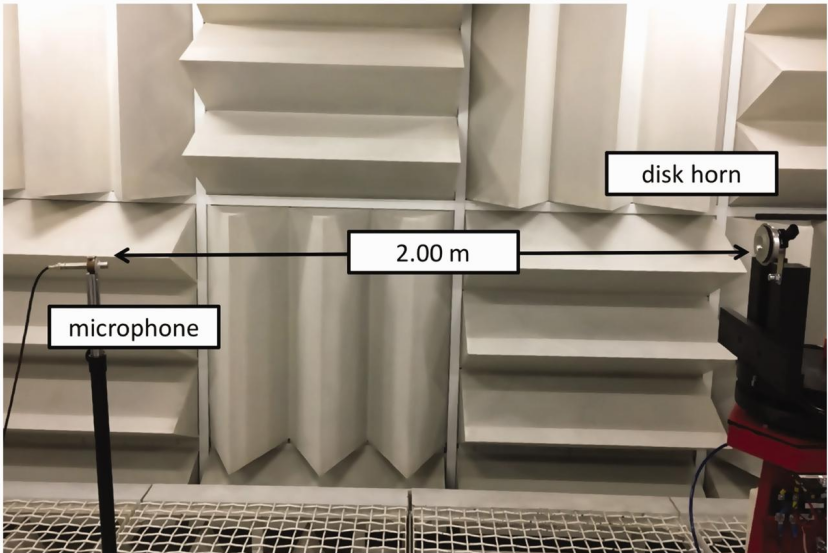
Acoustic performance is one of the most important aspects of car horn testing.
However, evaluating sound performance involves more than listening to a horn or checking a single decibel figure.
Sound Pressure Level
Sound pressure level is commonly expressed in decibels, often using A-weighted measurements such as dB(A).
When comparing samples, buyers should confirm:
- The specified sound pressure level
- Measurement distance
- Microphone position and direction
- Test environment
- Supply voltage
- Measurement equipment and procedure
These conditions directly affect the interpretation of test results.
For example, a sound measurement taken close to the horn cannot be compared directly with a measurement taken at a greater distance.
The applicable regulatory or customer-specific method should determine the formal acceptance procedure.
Sound Frequency
Frequency influences the perceived pitch of a horn.
Automotive horn systems may use a high-tone unit, a low-tone unit, or a combination of both.
Buyers should compare the measured frequency with the specification for each individual model.
If a horn is specified at a particular nominal frequency with an agreed tolerance, the sample should be evaluated against that documented requirement rather than a general industry assumption.
High-Tone and Low-Tone Performance
When testing a dual-tone horn set, inspect both units separately before evaluating them together.
The assessment should establish whether:
- Each horn operates at its specified frequency.
- Each unit produces a stable, continuous sound during normal activation.
- The two horns operate correctly together.
- The combined sound is suitable for the intended application.
- The electrical system can support simultaneous operation.
A dual-tone set should not be approved solely because its combined sound appears loud.
Sound Stability and Repeatability
Repeated activation can reveal performance problems that may not appear during a single short demonstration.
Buyers should observe whether the horn starts consistently and whether its acoustic characteristics remain stable across the specified test sequence.
Unexpected buzzing, intermittent operation, unusual sound changes, or failure to activate should be investigated.
4. What Electrical Tests Should Be Performed on Car Horn Samples?
Electrical compatibility is essential because automotive horns operate as part of a vehicle's electrical system.
Even a horn with acceptable acoustic performance may be unsuitable if its electrical requirements do not match the intended vehicle.
Rated Voltage Verification
Automotive horns are commonly offered for 12V and 24V vehicle electrical systems.
Before testing, confirm the rated voltage of the sample and the intended application.
The test procedure should define the actual supply voltage and allowable operating range.
A nominal 12V product, for example, should not automatically be evaluated under every possible voltage condition without reference to its technical specification.
Current Consumption
Current draw is an important consideration for the horn circuit, wiring, switches, and relays.
Buyers should measure the operating current under defined conditions and compare it with the supplier's approved specification.
For dual-tone horn sets, the combined electrical demand should also be considered.
Excessive current consumption may create compatibility problems, while abnormal current readings can indicate a need for further inspection.
Activation and Electrical Stability
A practical electrical evaluation may include:
- Successful activation under the specified operating conditions
- Stable operation during the required activation period
- Consistent current consumption
- Correct electrical polarity behavior where applicable
- Reliable terminal connections
- Repeatable operation after multiple activations
Additional tests may be required for particular vehicle platforms, electronic control systems, or customer specifications.
Recording Electrical Test Conditions
Electrical test reports should document the supply voltage, measurement location, equipment used, environmental conditions, and test duration.
Without these details, comparing electrical results from different suppliers can be misleading.
5. How Can Buyers Evaluate Waterproofing and Environmental Durability?
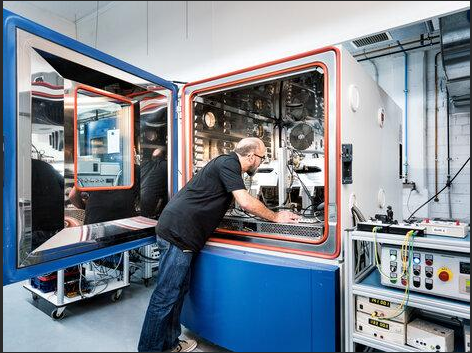
Automotive horns may be installed in locations exposed to moisture, dust, road debris, temperature changes, and vibration.
Consequently, environmental durability should be evaluated according to the intended installation location and operating conditions.
Water Resistance Testing
Water exposure can affect internal electrical connections, metal components, and acoustic performance.
Depending on the product design and customer requirements, evaluation may involve controlled water exposure followed by functional and visual inspection.
Buyers should confirm:
- Which water-exposure procedure applies
- How the sample is positioned during testing
- The exposure duration and conditions
- Whether functional testing is performed afterward
- Whether unacceptable water ingress or corrosion is observed
A demonstration of water being sprayed onto a horn does not, by itself, establish a standardized IP rating.
Any claimed protection rating should be supported by appropriate testing and documentation.
High- and Low-Temperature Testing
Automotive components may experience substantial temperature variation during storage, transportation, and vehicle operation.
Temperature evaluation helps determine whether a horn continues to meet its functional requirements after exposure to specified conditions.
Buyers should review both the test temperature and exposure duration.
The procedure should also distinguish between operation during temperature exposure and functional testing after the sample returns to a defined condition.
A product that operates normally at room temperature may behave differently after environmental stress.
Corrosion Resistance
Corrosion can affect mounting hardware, electrical contacts, surface-treated components, and other exposed metal parts.
For applications involving road salt, humidity, or coastal environments, corrosion resistance may be particularly important.
Salt spray or other corrosion tests may be appropriate when required by the customer specification.
Buyers should review the applicable test method, exposure time, and acceptance criteria rather than relying only on a statement that a product is corrosion-resistant.
Vibration Resistance
Vehicle vibration can place repeated stress on mounting brackets, electrical terminals, and internal assemblies.
Vibration testing can help identify loose components, connection failures, mechanical fatigue, or changes in acoustic performance.
The test conditions should reflect the intended vehicle application and relevant customer requirements.
Endurance Testing
Endurance testing evaluates performance after repeated activation.
A suitable test procedure should specify the number of operating cycles, activation duration, rest interval, electrical conditions, and acceptance criteria.
Where UN Regulation No. 28 applies, buyers should consult the relevant provisions for audible warning device endurance testing.
Passing a short functional demonstration is not equivalent to passing a defined endurance test.
Buyer tip: Request test reports that identify the exact horn model, test method, conditions, results, and acceptance criteria.
6. Why Are Mounting Brackets and Connectors Important for Compatibility?
Acoustic and electrical performance are important, but a car horn must also fit the intended vehicle.
Compatibility problems can increase installation costs and create difficulties for distributors serving multiple vehicle models.
Mounting Dimensions
Check the sample's:
- Overall dimensions
- Mounting-hole diameter
- Bracket orientation
- Available installation clearance
- Required mounting hardware
- Position of the sound outlet
These measurements should be compared with the applicable vehicle or customer drawings.
Electrical Connector Compatibility
Connector configurations can vary among vehicle manufacturers and aftermarket applications.
Buyers should verify the terminal arrangement, connector dimensions, polarity or grounding requirements, and wiring compatibility.
A physically similar connector should not be assumed to provide the correct electrical connection.
Installation Position
Some horn designs have specific mounting recommendations relating to water exposure, sound projection, and mechanical support.
Incorrect positioning may affect durability or performance.
Where possible, evaluate the sample in a representative vehicle installation rather than relying exclusively on laboratory measurements.
Vehicle-Specific Verification
For OEM programs, compatibility should be confirmed against approved engineering drawings and relevant vehicle requirements.
For aftermarket distribution, buyers may need to evaluate multiple representative vehicle applications.
Any required adapters or modifications should be identified before approving the product for mass production.
7. How Do You Compare Samples from Different Car Horn Manufacturers?
Comparing automotive horn samples is more reliable when every supplier is evaluated against the same requirements.
A sample comparison should begin with a clearly defined specification.
Use Consistent Testing Conditions
If different suppliers test their products using different voltages, microphone distances, or environmental conditions, the reported results may not be directly comparable.
Where practical, arrange for samples to be tested using the same procedure and suitable calibrated equipment.
Evaluate More Than Sound Output
A horn should not automatically receive the highest overall rating simply because it produces the greatest measured sound pressure.
Professional buyers should consider several factors together:
| Evaluation Area | Key Considerations |
|---|---|
| Acoustic performance | Sound pressure, frequency, stability |
| Electrical performance | Voltage compatibility, current draw |
| Mechanical quality | Housing, brackets, terminals |
| Installation compatibility | Dimensions, connectors, clearance |
| Environmental durability | Water, temperature, corrosion, vibration |
| Documentation | Specifications, reports, approvals |
| Production readiness | Repeatability, quality control, traceability |
The relative importance of these factors depends on the target market and purchasing application.
Review Supplier Documentation
Ask each manufacturer for the relevant technical documents.
These may include product drawings, electrical specifications, acoustic test results, environmental test records, and applicable approval documentation.
Review whether the documentation identifies the same product version being offered for purchase.
A technically impressive report is of limited value if it cannot be linked to the actual sample.
Consider Production Capability
A well-performing sample demonstrates potential product suitability, but it does not automatically prove that a supplier can consistently manufacture the same product at scale.
Buyers should also review manufacturing controls, inspection procedures, change management, and the supplier's ability to investigate quality issues.
8. What Should Be Included in a Car Horn Sample Approval Checklist?
A structured checklist helps purchasing and quality teams document findings and make consistent approval decisions.
The following checklist can be adapted to specific automotive horn projects.
Automotive Horn Sample Testing Checklist
| Inspection Item | Verification Requirement |
|---|---|
| Model identification | Matches the requested model and version |
| Product appearance | Meets agreed visual requirements |
| Housing and components | No unacceptable damage or defects |
| Mounting bracket | Matches approved dimensions and design |
| Electrical terminals | Correct configuration and secure connection |
| Rated voltage | Matches the application specification |
| Current consumption | Within agreed limits |
| Sound pressure level | Meets specified acceptance criteria |
| Sound frequency | Within approved frequency tolerance |
| Dual-tone operation | Both units operate correctly together |
| Water resistance | Meets the agreed test requirements |
| Temperature performance | Meets applicable functional criteria |
| Corrosion resistance | Meets specified evaluation requirements |
| Vibration resistance | No unacceptable structural or functional issues |
| Endurance performance | Meets the defined cycle and performance requirements |
| Product marking | Correct identification and required markings |
| Documentation | Relevant reports and drawings are available |
| Packaging | Meets agreed protection and labeling requirements |
Not every project requires every test.
The final inspection plan should be developed according to the product application, target market regulations, customer specifications, and purchasing risk.
Record the Results
For each applicable item, buyers should record:
- Test or inspection method
- Acceptance criteria
- Actual result
- Pass, fail, or pending status
- Supporting report or photograph
- Responsible reviewer
- Date of evaluation
Any deviations should be documented and resolved before final approval.
Sample Approval Decision
A sample can be classified as approved, conditionally approved, or rejected according to the buyer's quality procedure.
Conditional approval should identify the outstanding requirements and the evidence needed before production release.
A sample should not be treated as fully approved when critical safety, regulatory, or functional requirements remain unresolved.
9. How Can Buyers Ensure Approved Samples Match Mass-Produced Horns?
One of the most important sourcing challenges is ensuring that mass-produced products maintain the same approved characteristics.
Sample approval is only the beginning of quality control.
Establish a Golden Sample
An approved reference sample, often called a golden sample, can help support future comparisons.
The reference should be clearly identified, protected from damage, and linked to the approved specification.
Where appropriate, both the buyer and manufacturer may retain controlled reference samples.
A physical reference should supplement—not replace—technical drawings and measurable acceptance criteria.
Define a Production Specification
Before mass production, document the agreed requirements covering:
- Product model and configuration
- Electrical and acoustic parameters
- Critical dimensions and tolerances
- Materials and components where specified
- Surface treatment and appearance
- Markings and labeling
- Packaging requirements
- Inspection and testing methods
This information creates a common reference for purchasing, engineering, production, and quality teams.
Control Changes After Approval
Changes to components, materials, tooling, manufacturing processes, or product design may affect performance.
Buyers should establish which changes require notification and reapproval.
For critical changes, additional sample evaluation may be necessary before production continues.
Apply Production Inspection
Quality control should extend beyond final shipment inspection.
A suitable process may include incoming material checks, in-process inspections, functional testing, and finished-product inspection.
Sampling plans and acceptance limits should be agreed according to the risk and customer requirements.
Maintain Traceability
Traceability can help buyers and manufacturers identify affected products if a quality problem arises.
Depending on the project, records may link finished products to production batches, inspection results, or manufacturing dates.
This information can support corrective action and reduce the scope of unnecessary product recalls or reinspection.
Verify Shipment Quality
Before shipment, buyers may request inspection records or arrange additional verification.
The inspection should evaluate the agreed production specifications and confirm that any previously identified issues have been resolved.
A consistent quality system helps connect sample approval with actual delivery performance.
10. How Does JINDONG Support Car Horn Sample Evaluation and Quality Control?
Choosing an automotive horn manufacturer involves evaluating both the product and the processes behind it.
JINDONG (Hubei Jin Dong Electronic Technology Co., Ltd.) manufactures automotive and motorcycle horns and provides OEM/ODM cooperation for different customer requirements.
Its manufacturing activities include injection molding, metal stamping, electrophoretic coating, and product assembly.
These production processes provide a foundation for managing component quality and finished-product consistency.
Product Performance Evaluation
For automotive horn projects, relevant evaluation areas include acoustic performance, electrical characteristics, mounting compatibility, and durability.
JINDONG's product testing activities include sound performance and reliability evaluation.
The applicable inspection requirements should be confirmed according to the selected model and customer's technical specification.
Application-Specific Product Selection
Different markets and vehicle applications may require different horn configurations.
Buyers can discuss factors such as:
- 12V or 24V electrical requirements
- High-tone and low-tone combinations
- Horn structure and housing design
- Mounting and connector requirements
- Branding and packaging customization
- Applicable market approval requirements
Confirming these details during sample evaluation helps reduce misunderstandings before production.
OEM and ODM Cooperation
For customers developing customized automotive horn products, technical communication is particularly important.
Clear specifications, approved samples, documented requirements, and change control help establish a more reliable cooperation process.
Customers should request the relevant model specifications, available test documentation, and applicable approval information during the sourcing process.
From Sample Evaluation to Long-Term Supply
Successful cooperation requires more than approving an individual product.
It also depends on communication between the buyer and manufacturer, consistent production processes, and effective handling of quality feedback.
For OEM buyers, distributors, and wholesalers, establishing a clear sample approval process can provide a stronger foundation for repeat orders and long-term supply relationships.
Frequently Asked Questions About Car Horn Sample Testing
1. What is the most important test when evaluating a car horn sample?
There is no single test that determines overall suitability. Buyers should evaluate acoustic performance, electrical compatibility, installation requirements, and applicable durability criteria together.
2. Can I compare car horn samples based only on decibel ratings?
No. Sound pressure measurements depend on test distance, microphone position, voltage, and other conditions. Ratings should be compared only when the measurement methods are sufficiently consistent.
3. Should I test high-tone and low-tone horns separately?
Yes. Each horn should be evaluated against its individual specification, followed by a combined operation test to verify performance and electrical compatibility.
4. Does passing a waterproof test mean a horn is completely waterproof?
Not necessarily. Water resistance depends on the specific test method and exposure conditions. A formal protection rating requires appropriate supporting test evidence.
5. How many car horn samples should I test before placing a bulk order?
The appropriate quantity depends on project risk, product complexity, customer requirements, and the testing plan. Multiple samples from representative production conditions may provide more useful information than a single demonstration unit.
6. Is E-mark approval required for every car horn market?
Requirements vary by destination market, vehicle category, and intended application. Buyers should verify applicable regulations and request approval documentation for the exact product model where required.
7. How can buyers prevent quality differences between samples and bulk orders?
Use approved technical specifications, controlled reference samples, documented inspections, supplier change-control procedures, and relevant production verification.
Conclusion: Make Sample Testing Part of Your Car Horn Sourcing Strategy
Car horn sample testing is an important step in reducing procurement risk and establishing clear quality expectations before bulk purchasing.
A structured evaluation should go beyond appearance and sound demonstrations. Buyers need to examine electrical performance, acoustic characteristics, mounting compatibility, environmental durability, and supporting technical documentation.
Equally important, sample approval should be connected to production specifications, inspection procedures, and change management.
For OEM buyers, distributors, wholesalers, and importers, these practices can support more reliable purchasing decisions and stronger supplier relationships.
Looking for a car horn manufacturer for your next project?
JINDONG offers automotive and motorcycle horn manufacturing and OEM/ODM cooperation.
Contact the JINDONG team to discuss your application, request relevant product specifications, and arrange sample evaluation based on your purchasing requirements.
Website: https://jindongparts.com/
Contact: https://jindongparts.com/contact/