
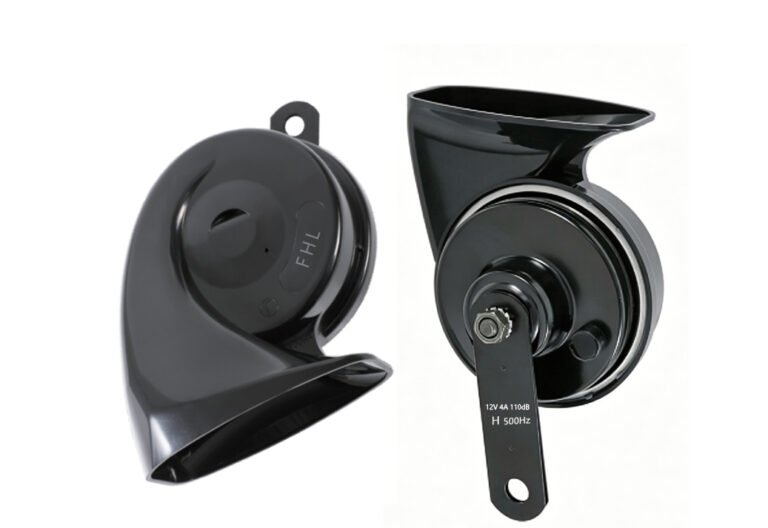
In the competitive global automotive aftermarket, product quality is essential, but it is not the only factor that influences purchasing decisions. For automotive parts distributors and wholesalers, packaging also plays an important role in product presentation, brand recognition, inventory management, and customer experience.
Private label car horn packaging allows businesses to sell automotive horns under their own brand identity, creating a more recognizable product range instead of relying entirely on generic factory packaging.
However, developing custom packaging involves more than adding a logo to a cardboard box. Buyers must consider packaging materials, product labeling, technical information, printing quality, transportation protection, minimum order quantities, and local market requirements.
For businesses sourcing automotive horns from China, understanding these factors can help reduce packaging errors, manage costs, and create a more consistent brand experience.
This guide explains the main options for custom car horn packaging, how the design and approval process works, and what distributors and wholesalers should check before placing an OEM or private label order.
What Is Private Label Car Horn Packaging?
Private label packaging refers to packaging designed around a buyer's own brand for products manufactured by another company.
In the automotive horn industry, a distributor or wholesaler may purchase horns from an OEM manufacturer and market them under its own brand name.
The packaging can feature the buyer's logo, brand colors, product information, and other approved visual elements.
Depending on the purchasing agreement, private label customization may cover the outer packaging, product labels, instruction sheets, or other branding components.
Private Label vs. Standard Packaging
Standard packaging typically uses an existing design supplied by the manufacturer.
Private label packaging, by contrast, is developed to reflect the buyer's brand identity and specific market requirements.
| Feature | Standard Packaging | Private Label Packaging |
|---|---|---|
| Brand identity | Manufacturer or generic branding | Buyer's own brand |
| Packaging design | Existing design | Customized artwork |
| Product information | Standard specifications | Market-specific information |
| Printing setup | Usually existing | May require additional preparation |
| Minimum order quantity | Depends on supplier | Depends on customization requirements |
| Brand differentiation | Limited | Greater potential for differentiation |
Private label packaging does not necessarily mean the horn itself has been redesigned.
A distributor may begin with an existing automotive horn model and customize its packaging before considering more extensive product modifications.
Private Label, White Label, and OEM: What Is the Difference?
These terms are sometimes used interchangeably, but they can describe different sourcing arrangements.
White label products generally use existing product designs that can be marketed by multiple buyers under different brands.
Private label products are sold under a buyer's own brand and may involve customized packaging, labeling, or selected product features.
OEM cooperation may involve manufacturing products according to agreed customer specifications, designs, or branding requirements.
The actual level of customization depends on the supplier's capabilities and the agreed project scope.
For automotive parts businesses developing their own brand, private label packaging can provide a practical starting point without necessarily requiring a completely new horn design.
Why Does Custom Packaging Matter for Automotive Horn Distributors?
Custom packaging serves several functions beyond improving visual appearance.
For distributors and wholesalers, it can support brand development, help customers identify the correct products, and improve operational efficiency throughout the supply chain.
1. Building Brand Recognition
Consistent packaging helps customers recognize a brand across different automotive horn models.
Using the same logo, colors, typography, and visual structure can create a recognizable product family.
For example, a distributor offering several high-tone, low-tone, and dual-tone horn models can use a consistent packaging design while distinguishing individual products through model numbers and specifications.
This approach is particularly useful for businesses expanding their aftermarket product range.
2. Improving Product Presentation
Packaging often forms a customer's first impression of an automotive part.
Clear graphics, organized information, and appropriate materials can make a product easier to understand and more professional in appearance.
However, attractive packaging should not be treated as evidence of superior product performance.
The packaging should accurately represent the quality, specifications, and intended application of the actual horn.
3. Communicating Technical Information
Automotive horns are electrical components, and customers need accurate information before purchasing or installing them.
Packaging can display important details such as:
- Product model
- Rated voltage
- Horn type
- High-tone or low-tone designation
- Product configuration
- Compatible application, where verified
- Installation information
- Manufacturer or brand identification
Providing accurate technical information can help customers select suitable products and reduce misunderstandings.
4. Supporting Retail and Warehouse Operations
Well-designed packaging can also improve product handling.
Consistent package dimensions, clear model labels, and suitable barcodes can support inventory management, order picking, and retail display.
For distributors managing multiple SKUs, these operational benefits may be as important as the visual appearance of the packaging.
What Packaging Options Are Available for Car Horns?
Different packaging formats offer different advantages in terms of cost, product protection, display, and transportation.
The appropriate choice depends on the horn's dimensions, weight, accessories, sales channel, and target market.
1. Printed Color Boxes
Printed color boxes are a common option for retail-oriented automotive horn products.
They allow distributors to display branding, product photographs, specifications, and other relevant information.
Common materials include folding carton board and corrugated board.
The material and thickness should be selected according to the weight and protection requirements of the product.
Printing finishes may include:
- Matte or gloss lamination
- Spot UV coating
- Embossing or debossing
- Foil stamping
- Custom color printing
Additional finishes may improve presentation but can increase cost and production complexity.
2. Corrugated Packaging Boxes
Corrugated boxes can provide additional structural protection for heavier or more delicate automotive horn products.
They may be used as individual product boxes or outer shipping cartons.
The appropriate board grade depends on product weight, stacking requirements, transportation conditions, and packaging design.
For international shipments, carton strength should be evaluated according to actual distribution requirements rather than appearance alone.
3. Blister Packaging
Blister packaging uses a formed plastic component to hold or display the product.
It may be paired with printed cardboard or other supporting materials.
Transparent packaging can allow customers to view the horn before purchasing.
However, blister packaging may involve additional tooling, higher setup costs, and material considerations.
Buyers should also review packaging-waste requirements in their destination markets.
4. Polybags and Protective Inner Packaging
Polybags, protective sleeves, inserts, and partitions may be used within a broader packaging system.
Their purpose can include preventing surface scratches, separating accessories, or limiting movement during transportation.
The selected materials should be suitable for the product and its storage conditions.
5. Packaging for Dual-Tone Horn Sets
Dual-tone automotive horn sets require particular attention to internal packaging design.
A typical set may contain a high-tone horn and a low-tone horn, along with mounting accessories where included.
The packaging should keep the two horns securely positioned and protect vulnerable parts such as electrical terminals and mounting brackets.
An internal divider or custom insert may help prevent contact between the horns during handling and transport.
Buyer Tip: Choose the packaging structure according to the actual product configuration, not simply the lowest box price.
What Information Should Be Included on a Car Horn Package?
Accurate packaging information helps buyers, retailers, installers, and end customers identify the product.
The exact labeling requirements depend on the destination country, sales channel, and applicable regulations.
Essential Product Information
Depending on the product and market, packaging information may include:
| Information | Purpose |
|---|---|
| Brand name and logo | Brand identification |
| Product name | Identification of the horn type |
| Model number | SKU and product identification |
| Rated voltage | Electrical compatibility |
| High-tone or low-tone designation | Product selection |
| Product quantity | Package contents |
| Installation instructions | Correct product use |
| Manufacturer or importer details | Traceability and legal identification |
| Country of origin | Origin disclosure where required |
| Barcode or product identifier | Retail and inventory management |
Technical information should match the actual product and approved documentation.
For example, if sound pressure or frequency is printed on the packaging, the values and measurement conditions should be supported by the applicable product specification.
Compliance Information and Certification Markings
Regulatory markings require particular care.
Some automotive audible warning devices may be subject to vehicle type-approval requirements under applicable regulations, including relevant UNECE frameworks.
Where E-mark approval applies, the approval information and marking must correspond to the approved product type.
CE marking is a separate regulatory system and is required only where applicable legislation specifically mandates it. It should not automatically be printed on all automotive horn packaging.
Similarly, RoHS-related statements should reflect the actual regulatory scope and supporting compliance information.
ISO 9001 or IATF 16949 management system certifications should not be presented as though they constitute individual product approval.
Before printing certification marks, approval numbers, or compliance claims, buyers should verify the applicable requirements and supporting documents.
Avoid Unverified Compatibility Claims
Some aftermarket horns may fit multiple vehicle applications, but this does not mean every model is universally compatible.
Avoid broad statements such as "Fits All Cars" unless the claim can be substantiated.
Where compatibility information is provided, it should consider voltage, dimensions, electrical connections, mounting requirements, and other relevant factors.
Language and Local Market Requirements
Packaging for different countries may require different languages or information.
For distributors serving multiple regions, multilingual packaging can be useful.
However, translations should be checked for technical accuracy, especially for warnings, voltage information, and installation instructions.
Buyers should confirm applicable labeling requirements with the relevant local compliance or import specialists.
How Can Buyers Customize Logos, Colors, and Product Labels?
Private label customization can include several branding elements.
The available options depend on the product structure, manufacturing process, printing method, and order requirements.
Logo and Brand Identity
A distributor's logo may be incorporated into the packaging design, product labels, or other agreed branding materials.
For some projects, branding on the product itself may also be considered.
The feasibility of printing, engraving, embossing, or molded branding depends on the specific horn design and production arrangements.
Buyers should confirm these possibilities with the manufacturer before finalizing artwork.
Custom Packaging Colors
Brand colors can help create a consistent appearance across multiple product models.
For printed packaging, colors may be specified using CMYK values or Pantone references.
CMYK printing is commonly used for full-color artwork, while spot colors may be selected for more controlled reproduction of particular brand colors.
However, printed color appearance can vary with paper material, ink, coating, and production conditions.
A digital preview alone cannot guarantee an exact match to the finished printed package.
Product Labels
Custom labels may include:
- Model numbers
- Barcodes
- Brand identification
- Voltage information
- Batch or traceability information
- Required product markings
The label material and attachment method should be suitable for the intended product and operating environment.
Instruction Sheets and Manuals
Installation instructions can improve the customer experience and reduce confusion.
Where instructions are required, they should reflect the actual electrical and mechanical configuration of the horn.
For international distribution, buyers may prepare different language versions according to their target markets.
Technical translations should be reviewed before printing.
How Does Packaging Protect Car Horns During International Shipping?
Packaging plays an important role in protecting automotive horns during transportation, storage, and distribution.
International shipments may involve repeated handling, stacking, vibration, temperature changes, and moisture exposure.
Moisture Protection
Ocean freight and long-term storage may expose packages to humidity and condensation.
Appropriate packaging materials and protective arrangements can help limit moisture-related risks.
Depending on the product and shipping conditions, protection may involve suitable inner packaging, moisture barriers, or other measures.
The need for additional moisture protection should be assessed according to the product's characteristics and transportation conditions.
Shock and Vibration Protection
Car horns contain mechanical and electrical components that can be affected by impact or excessive movement.
Internal packaging should protect the housing, terminals, brackets, and other vulnerable parts.
For dual-tone sets, separators or fitted inserts can help prevent the two horn units from contacting each other.
Outer Carton Strength
Individual packages are often placed inside larger export cartons for transportation.
Outer cartons should be selected according to:
- Total packed weight
- Carton dimensions
- Stacking conditions
- Handling methods
- Transportation distance
- Warehouse storage requirements
Corrugated board grade and construction should be determined according to the actual packaging requirements.
Packaging Verification
Where necessary, buyers may request packaging samples or suitable transport-packaging evaluations.
Testing may include drop, compression, or vibration procedures based on the shipping environment and agreed requirements.
Such testing should be performed using defined methods and acceptance criteria.
A package should not be described as having passed a standardized test unless there is appropriate supporting evidence.
Balancing Protection and Shipping Cost
Stronger or larger packaging does not always provide the best overall solution.
Oversized packages may increase freight and storage costs, while insufficient packaging can increase the risk of damage.
A suitable design balances product protection, material cost, carton efficiency, and transportation requirements.
What Affects the Cost and MOQ of Custom Car Horn Packaging?
The cost of private label car horn packaging depends on several factors.
Understanding these variables can help distributors prepare more accurate purchasing budgets.
1. Minimum Order Quantity
Minimum order quantity, or MOQ, may vary according to the packaging format and degree of customization.
Existing packaging designs may require fewer setup arrangements than fully customized printed boxes.
New artwork, printing plates, special materials, or custom inserts can affect minimum production quantities.
There is no single MOQ that applies to every private label automotive horn project.
Buyers should request a quotation based on the selected model, packaging requirements, and estimated order quantity.
2. Packaging Materials
Material selection affects both price and protection.
For example, different carton-board grades, corrugated structures, plastic inserts, and protective materials have different cost implications.
A retail-oriented package may prioritize printed presentation, while a bulk distribution package may prioritize handling efficiency and transportation protection.
3. Printing Methods and Finishes
Printing costs depend on artwork complexity, production quantity, color requirements, and finishing processes.
Common considerations include:
- CMYK full-color printing
- Pantone or other spot colors
- Matte or gloss finishing
- Spot UV coating
- Foil stamping
- Embossing
- Special surface treatments
Not every finish is necessary for an effective packaging design.
4. Tooling and Setup Costs
Custom structures may require packaging dies, printing plates, molds, or other setup work.
These costs may be charged separately or reflected in unit pricing, depending on the agreement.
Buyers should confirm whether setup charges are one-time costs and whether approved artwork or tooling can be reused for repeat orders.
5. Order Quantity and Product Variations
Ordering several models with different artwork may affect packaging costs.
For example, a distributor may want separate packages for 12V and 24V horns or for different high-tone and low-tone sets.
Buyers should confirm whether each artwork variation has its own MOQ or setup requirements.
6. Transportation and Storage Costs
Packaging dimensions can influence the number of cartons that fit on a pallet or inside a shipping container.
More efficient packaging dimensions may reduce transportation and warehouse space requirements.
When comparing packaging options, consider the total cost per saleable unit rather than only the packaging purchase price.
How to Prepare Packaging Artwork and Approve Samples Before Production?
A structured artwork approval process helps prevent printing mistakes, product information errors, and unnecessary packaging rework.
For private label car horn orders, buyers should confirm both the graphic design and the physical packaging structure before mass production.
Step 1: Prepare Brand Assets
Provide the approved brand logo, brand colors, typography requirements, and product information.
Vector formats such as AI, EPS, or print-ready PDF are generally suitable for logos and line graphics.
High-resolution raster images can also be used when prepared at the correct final print size.
Low-resolution images may appear blurred or pixelated in printed packaging.
Step 2: Obtain the Packaging Dieline
A dieline is a flat technical layout showing the packaging structure.
It identifies areas such as:
- Cut lines
- Fold lines
- Glue flaps
- Bleed areas
- Safe text margins
- Front, back, and side panels
Artwork should be designed according to the approved dieline.
Important text and logos should be positioned within suitable safe areas to avoid trimming or folding problems.
Step 3: Confirm CMYK and Pantone Requirements
Packaging artwork is commonly prepared using CMYK printing specifications or agreed spot colors.
Before production, buyers should confirm:
- Required color mode
- Brand color references
- Paper or board material
- Surface finishing
- Bleed specifications
- Image resolution
- Font handling and text outlines
- Barcode requirements
For important brand colors, a printed proof or approved physical sample is preferable to relying only on a computer display.
Step 4: Review Digital Proofs
Digital proofs are useful for checking:
- Spelling and grammar
- Product photographs
- Model numbers
- Rated voltage
- Logo placement
- Barcode positioning
- General artwork layout
However, digital previews cannot fully demonstrate material thickness, structural strength, or final printed color.
Step 5: Approve a Physical Packaging Sample
Where appropriate, request a physical packaging sample before full production.
The sample should be checked for printing quality, dimensions, material, assembly, and fit with the actual horn.
Important considerations include whether the product fits securely and whether accessories are correctly positioned.
For dual-tone horn sets, confirm that both units can be accommodated without unnecessary movement or contact.
Step 6: Establish an Approved Reference
Once the packaging sample is approved, retain the approved artwork version, structural specification, and relevant sample records.
These references help maintain consistency for future production.
Changes to artwork, materials, labels, or packaging dimensions should be reviewed before implementation.
Buyer Tip: Approve the packaging and the actual horn configuration together. A box that fits one horn model may not fit another model with a different bracket or housing shape.
What Should Buyers Check Before Ordering Private Label Car Horns?
Before finalizing an OEM or private label automotive horn order, buyers should review the following checklist.
Private Label Car Horn Packaging Checklist
| Inspection Item | What to Verify |
|---|---|
| Brand logo | Correct artwork and placement |
| Brand colors | Approved color references |
| Product model | Matches the actual horn |
| Rated voltage | Correct 12V or 24V identification |
| Product information | Accurate specifications |
| Certification marks | Supported by applicable documentation |
| Country-of-origin marking | Meets applicable market requirements |
| Packaging language | Accurate and appropriate |
| Barcode | Correct data and readable print |
| Packaging dimensions | Suitable for the selected horn |
| Inner protection | Adequately protects the product |
| Accessories | Correctly listed and packed |
| Carton specification | Suitable for transport and storage |
| Artwork approval | Final version confirmed |
| Physical sample | Reviewed where required |
| MOQ and pricing | Agreed before production |
Barcode Verification
For retail products, a barcode may be required by the distributor or sales channel.
When using GS1 identifiers, buyers should follow the relevant barcode specifications.
Important considerations include barcode dimensions, print contrast, position, and quiet zones—the clear spaces around the barcode.
A barcode that looks correct on a computer screen may not scan reliably after printing.
For this reason, printed barcode verification is recommended before mass production.
Confirm Packaging Quantities
Buyers should also request packaging information for logistics planning.
Useful details include:
- Units per inner box
- Units per master carton
- Carton dimensions
- Net and gross weight
- Total carton quantity
- Pallet configuration, where relevant
These details help importers estimate transportation costs and organize warehouse operations.
Confirm Responsibility for Packaging Approval
Before production begins, both parties should understand who is responsible for artwork preparation, technical information, regulatory review, sample approval, and final confirmation.
Written approval helps reduce misunderstandings and makes future repeat orders easier to manage.
How Does JINDONG Support OEM and Private Label Car Horn Packaging?
JINDONG (Hubei Jin Dong Electronic Technology Co., Ltd.) is a China-based manufacturer specializing in automotive horns and motorcycle horns.
The company provides OEM and ODM manufacturing cooperation for international distributors, wholesalers, and automotive parts buyers.
For customers developing their own automotive horn brands, packaging and product identification are important considerations during sourcing discussions.
Automotive Horn Manufacturing Capabilities
JINDONG's manufacturing operations include:
- Injection molding
- Metal stamping
- Electrophoretic coating
- Product assembly
These manufacturing processes support the production of automotive and motorcycle horn products.
For buyers, understanding the manufacturer's production capabilities can help clarify product requirements, customization possibilities, and quality expectations.
Product Selection for Different Markets
Distributors and wholesalers may require different horn configurations according to their target markets.
Relevant purchasing considerations include:
- 12V and 24V applications
- High-tone and low-tone models
- Different horn structures
- Mounting requirements
- Electrical connection configurations
- Single-unit and paired-set packaging
The selected product configuration should be confirmed before packaging design is finalized.
OEM and Private Label Cooperation
Private label projects may involve discussions about customer branding, packaging artwork, product labels, carton specifications, and related customization requirements.
The available options, minimum order quantities, packaging materials, and production arrangements depend on the selected product and project requirements.
Clear communication during the planning stage can help buyers and manufacturers define the scope of customization before production.
Quality and Packaging Coordination
Product quality and packaging quality should be evaluated together.
A suitable packaging solution must protect the product while accurately communicating its technical specifications and intended application.
Before confirming a customized order, buyers should review the selected horn model, applicable documentation, packaging artwork, and agreed inspection criteria.
For international buyers, keeping these details consistent helps support more reliable order preparation.
Supporting Long-Term B2B Cooperation
For automotive parts distributors and wholesalers, private label sourcing is often part of a broader brand development strategy.
Consistent product information, recognizable packaging, suitable manufacturing arrangements, and effective communication can support future product-line expansion.
JINDONG works with customers to discuss their automotive horn sourcing requirements and potential OEM/ODM cooperation.
Buyers interested in private label automotive horns can contact the company with their target market, selected models, packaging preferences, and estimated purchasing quantities.
Conclusion
Private label car horn packaging offers distributors and wholesalers an opportunity to develop a more recognizable automotive parts brand.
However, successful packaging customization requires more than attractive graphics.
Businesses should consider packaging materials, product specifications, printing processes, regulatory labeling, transportation protection, cost structures, and sample approval procedures.
For international automotive horn sourcing, accurate technical information and a clearly defined packaging workflow are particularly important.
By coordinating packaging requirements with product specifications before mass production, buyers can reduce unnecessary revisions and improve consistency across their product range.
Looking for a Private Label Car Horn Manufacturer?
JINDONG manufactures automotive and motorcycle horns and provides OEM/ODM cooperation for international customers.
Whether you are developing a new automotive horn brand, expanding your wholesale product range, or exploring custom packaging options, JINDONG can discuss suitable product configurations and project requirements.
Contact JINDONG to discuss your branding needs, target market, selected horn models, estimated order quantities, and preferred packaging formats.
Build your automotive horn product range with JINDONG.
Website: https://jindongparts.com/
Contact Us: https://jindongparts.com/contact/